

In the high-stakes world of blockchain gaming, where every pixelated sword swing or rare loot drop can translate to real ownership via NFTs, minting costs often stand as the uninvited boss fight. Developers pour creativity into dynamic in-game assets, yet players and creators alike grapple with gas fees that spike during peak hours, sometimes eclipsing the value of the mint itself. Gaming app-chains with dynamic priority fee auctions offer a strategic pivot, enabling low-cost NFT mints through custom rollups and specialized fee markets tailored for gaming's bursty demand patterns.
Games increasingly leverage NFTs for rare items that grant privileges like exclusive arenas or boosted stats, as seen in dynamic NFT use cases from Chainlink's 2024 report. Yet, on general-purpose chains like Ethereum, minting a collection can devour budgets; artists face fees exceeding sale prices, per Instadnodes analysis on rollups as a service. This friction stifles innovation in player-owned economies.
Overcoming Minting Bottlenecks in Blockchain Gaming
Picture a live event in your favorite play-to-earn title: thousands rush to mint limited-edition skins as NFTs. Network congestion ensues, with priority fees soaring. Traditional blockchains, optimized for broad use cases, falter here. Ethereum's base fees adjust via EIP-1559, burning excess to curb inflation while tipping validators for priority, but gaming's unpredictable spikes demand more nuance.
Layer 2 solutions like Polygon and Arbitrum slash fees to near-zero for mints, yet they inherit Ethereum's sequencer risks. Custom rollups for gaming app-chains sidestep this by dedicating blockspace to specific dApps. ND Labs highlights dynamic NFTs evolving post-mint via on-chain updates, perfect for games where item traits shift with player achievements. Still, without smart fee mechanics, even these chains risk overload during drops.
Errna's work on player-owned ecosystems underscores custom NFT contracts for secure, utility-packed assets. But scaling mints affordably requires rethinking economics. Enter specialized fee markets gaming, where auctions dynamically allocate priority, ensuring efficient resource use without blanket hikes.
Crafting Custom Rollups for Gaming App-Chains
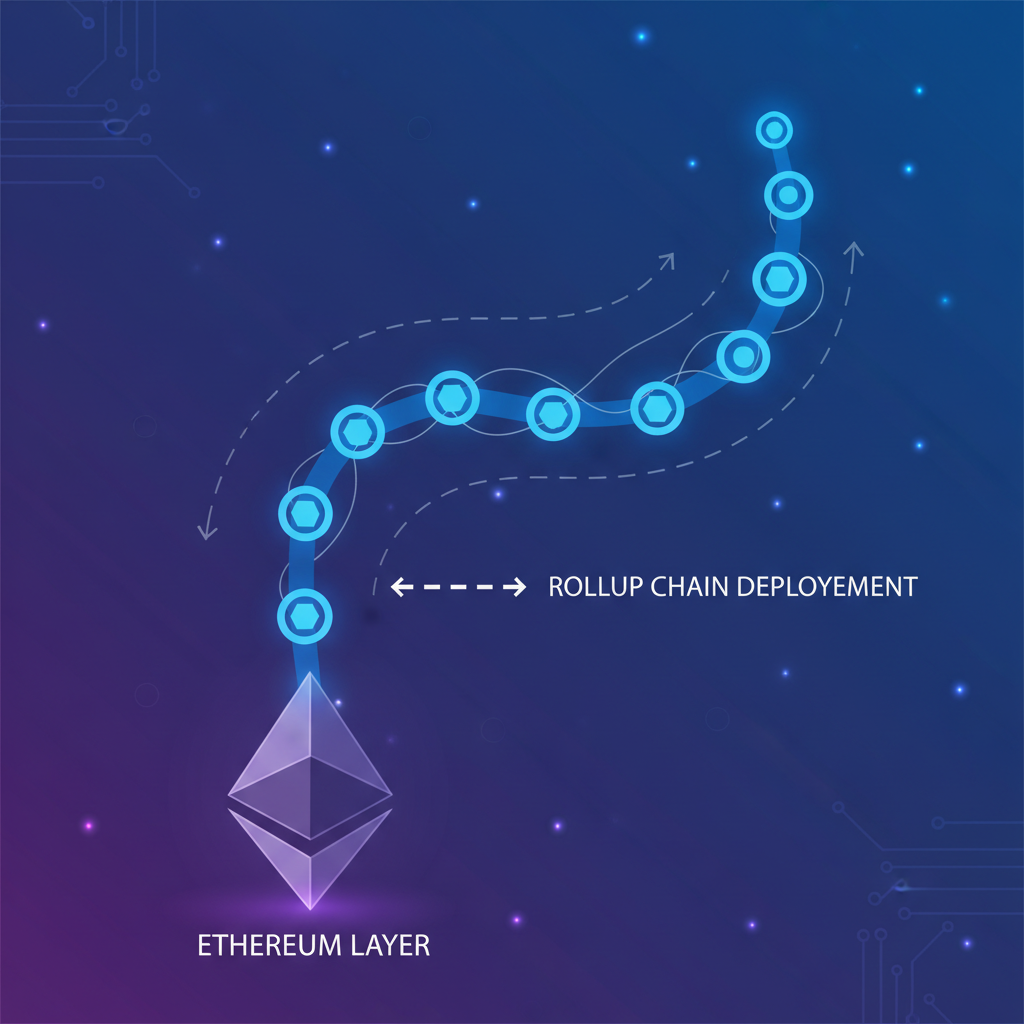
Gaming app-chains are application-specific blockchains, often rollups settling to Ethereum or other L1s, fine-tuned for genres like MMORPGs or battle royales. Unlike monolithic chains, they embed game logic directly, slashing latency for NFT mints tied to in-game events. CustomAppChains. com champions these for their scalability; developers deploy via tools like Foundry for on-chain dynamic SVGs, as in Klaytn's Medium tutorial.
Key advantage: sovereignty over fee structures. While EIP-1559 provides a baseline, gaming app-chains introduce dynamic priority fee auctions. Bidders compete via sealed auctions per block, prioritizing high-value txs like competitive mints without penalizing casual trades. This mirrors Foundation's rebate Dutch auctions for fair pricing, adapted to block production.
Chainstack's minting guide outlines five steps from contract deployment to metadata upload, but on app-chains, integrate auctions to cap costs. Rapid Innovation's NFT marketplace tutorial stresses scaling; here, rollups handle backend frontend synergy seamlessly. For low-cost blockchain gaming, this setup ensures fees hover low during lulls, surging surgically only for contested slots.
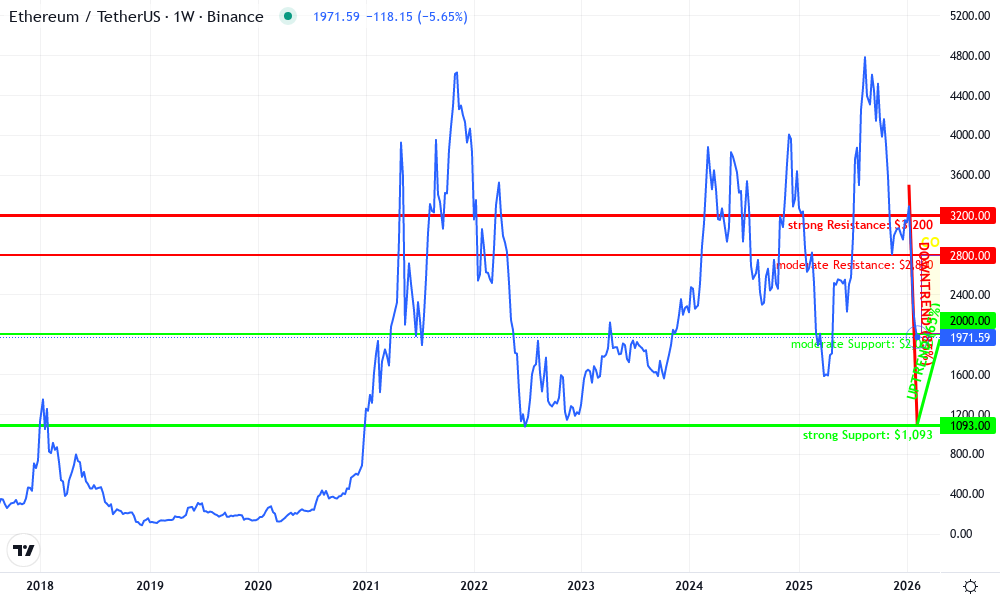
Ethereum Technical Analysis Chart
Analysis by Julia Reid | Symbol: BINANCE:ETHUSDT | Interval: 1W | Drawings: 7
Technical Analysis Summary
In my conservative style as Julia Reid, begin by drawing a prominent downtrend line connecting the January 2026 high around 3500 to the February low at 1093, using 'trend_line' with red color for caution. Then, overlay an emerging uptrend line from the 1093 low on 2026-02-12 to recent highs near 2500, in green but dashed to reflect low confidence. Mark key support at 1093 with a thick 'horizontal_line' labeled 'Strong Fundamental Support'. Add resistance horizontals at 2800 and 3200. Use 'fib_retracement' from the downtrend swing for potential retracement levels. Highlight the recent consolidation rectangle from March to June 2026 between 2000-2800. Place 'callout' texts for volume drying up and MACD bearish crossover. Finally, add 'long_position' marker conservatively above 2200 only after confirmation, with 'stop_loss' below 2000.
Risk Assessment: medium
Analysis: Volatile correction phase post-2025 highs, but ETH fundamentals bolstered by 2026 NFT/L2 advancements reduce systemic risk; low tolerance favors waiting
Julia Reid's Recommendation: Maintain long-term hold on ETH core allocation; avoid leverage, enter dips conservatively only on multi-week confirmation. Patience yields sustainable growth.
Key Support & Resistance Levels
📈 Support Levels:
- $1,093 - Cycle low support, strong historical bounce point aligned with fundamental ETH utility strong
- $2,000 - Recent swing low, moderate psychological support moderate
📉 Resistance Levels:
- $2,800 - Near-term resistance from prior consolidation high moderate
- $3,200 - Strong resistance from Q1 2026 breakdown level strong
Trading Zones (low risk tolerance)
🎯 Entry Zones:
- $2,200 - Conservative long entry on confirmed bounce from 2000 support with volume pickup, low risk per my tolerance low risk
🚪 Exit Zones:
- $3,000 - Profit target at fib 50% retracement of decline 💰 profit target
- $1,950 - Tight stop loss below key support to preserve capital 🛡️ stop loss
Technical Indicators Analysis
📊 Volume Analysis:
Pattern: drying up on downside
Volume decreasing during decline suggests exhaustion, potential reversal setup
📈 MACD Analysis:
Signal: bearish crossover but diverging
MACD shows bearish signal yet histogram contracting, watch for bullish flip
Applied TradingView Drawing Utilities
This chart analysis utilizes the following professional drawing tools:
Disclaimer: This technical analysis by Julia Reid is for educational purposes only and should not be considered as financial advice. Trading involves risk, and you should always do your own research before making investment decisions. Past performance does not guarantee future results. The analysis reflects the author's personal methodology and risk tolerance (low).
Dynamic Priority Fee Auctions in Action
At core, dynamic priority fee auctions treat blockspace as a marketplace. Users submit bids alongside txs; sequencers select top payers for inclusion, refunding overbids to foster competition. This outperforms static tips, as Chainscore Labs notes in designing dynamic systems: real-time adjustment based on demand prevents underutilization or waste.
In gaming, apply to NFT mints: during a boss raid drop, high bidders snag mint slots fast, while explorers pay pennies for inventory updates. HashLips Academy's dynamic pricing video adapts contracts accordingly, setting floors that auctions respect. Rain Infotech's 2025 marketplace outlook predicts monetization via such mechanisms, blending user experience with revenue.
Blockchain Development Company's guide emphasizes minting platforms with smart contract tools; pair these with app-chain auctions for drops that scale. Result? Prohibitive costs vanish, empowering creators. I've analyzed infrastructure for years; patience pays, but so does precision engineering like this, unlocking sustainable growth in decentralized gaming.
Implementing these auctions starts with sequencer modifications in your rollup stack. Sequencers, responsible for batching transactions, become auctioneers, sorting bids to fill blocks optimally. This setup shines in specialized fee markets gaming, where mints for rare loot don't subsidize unrelated traffic.
Deploy a Gaming App-Chain Rollup with Dynamic Priority Fees for Affordable NFT Mints

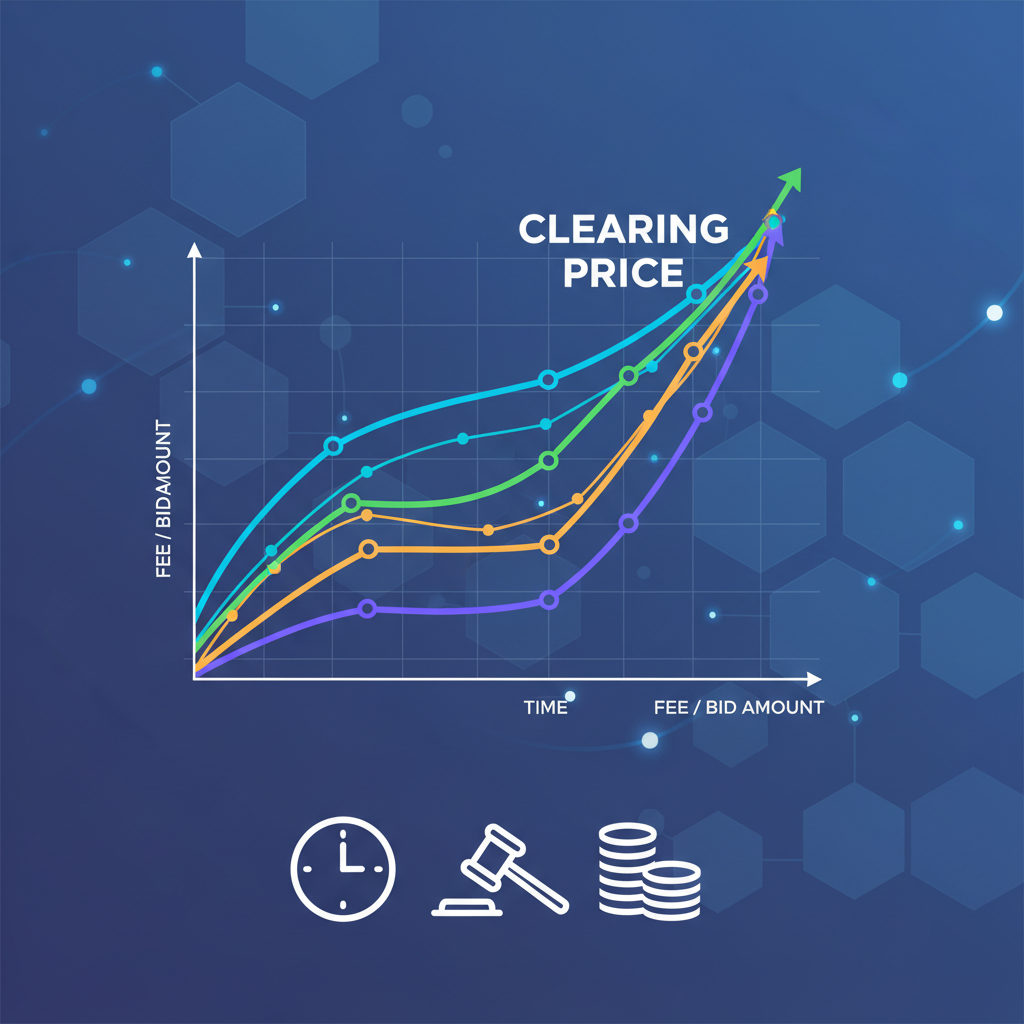
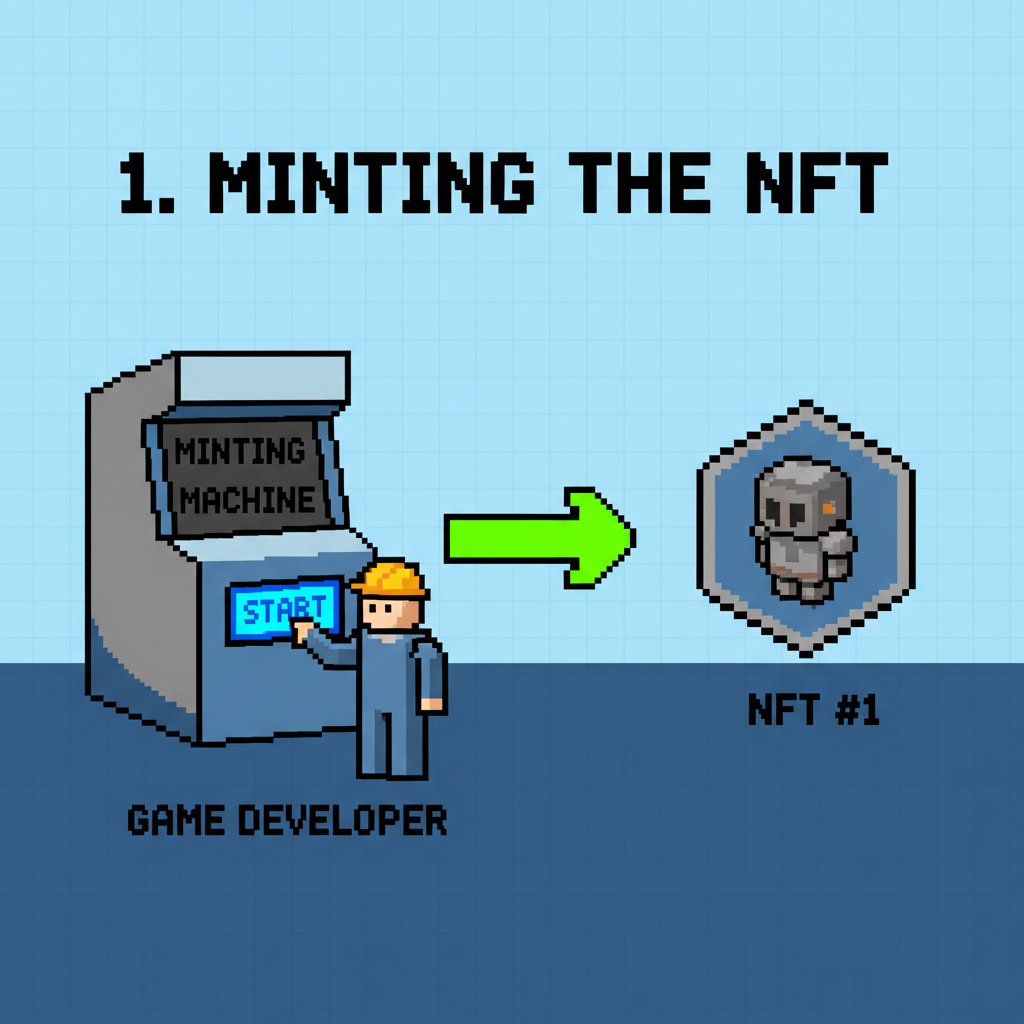
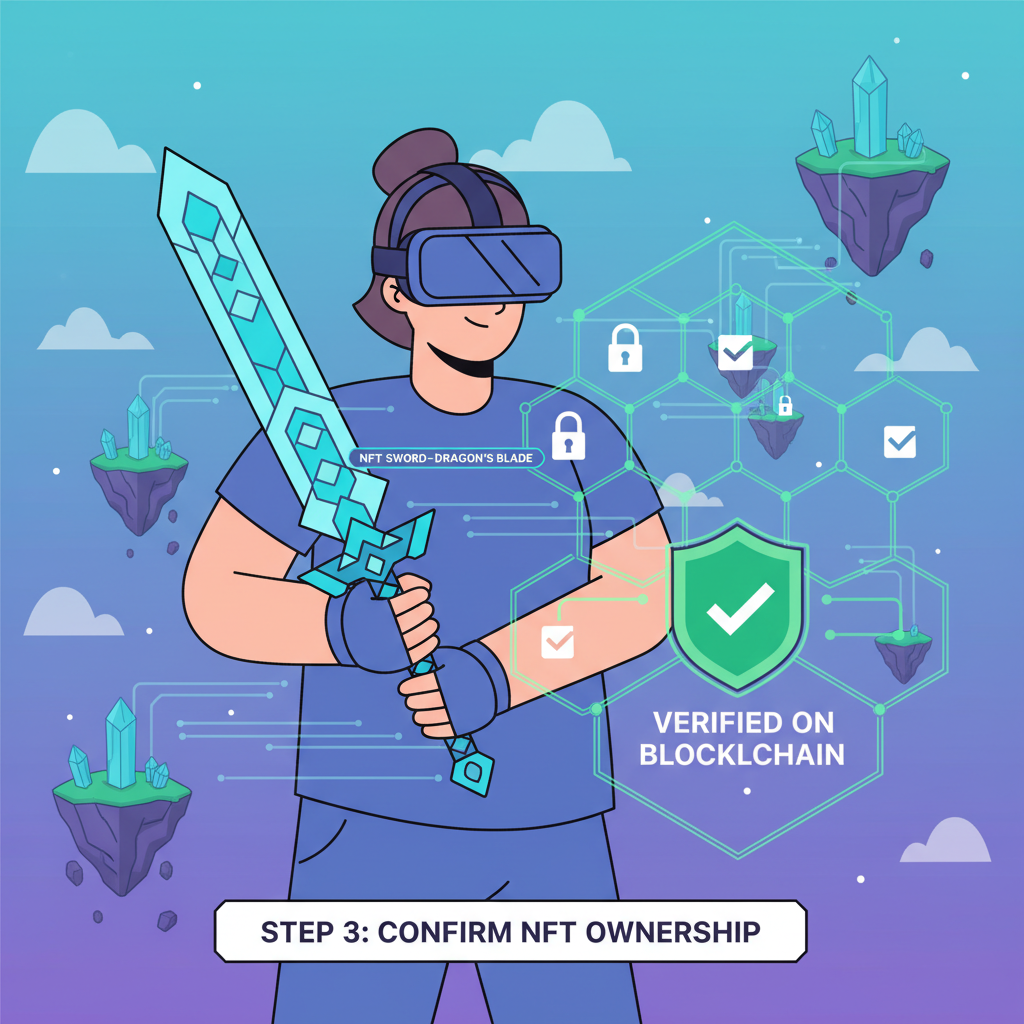
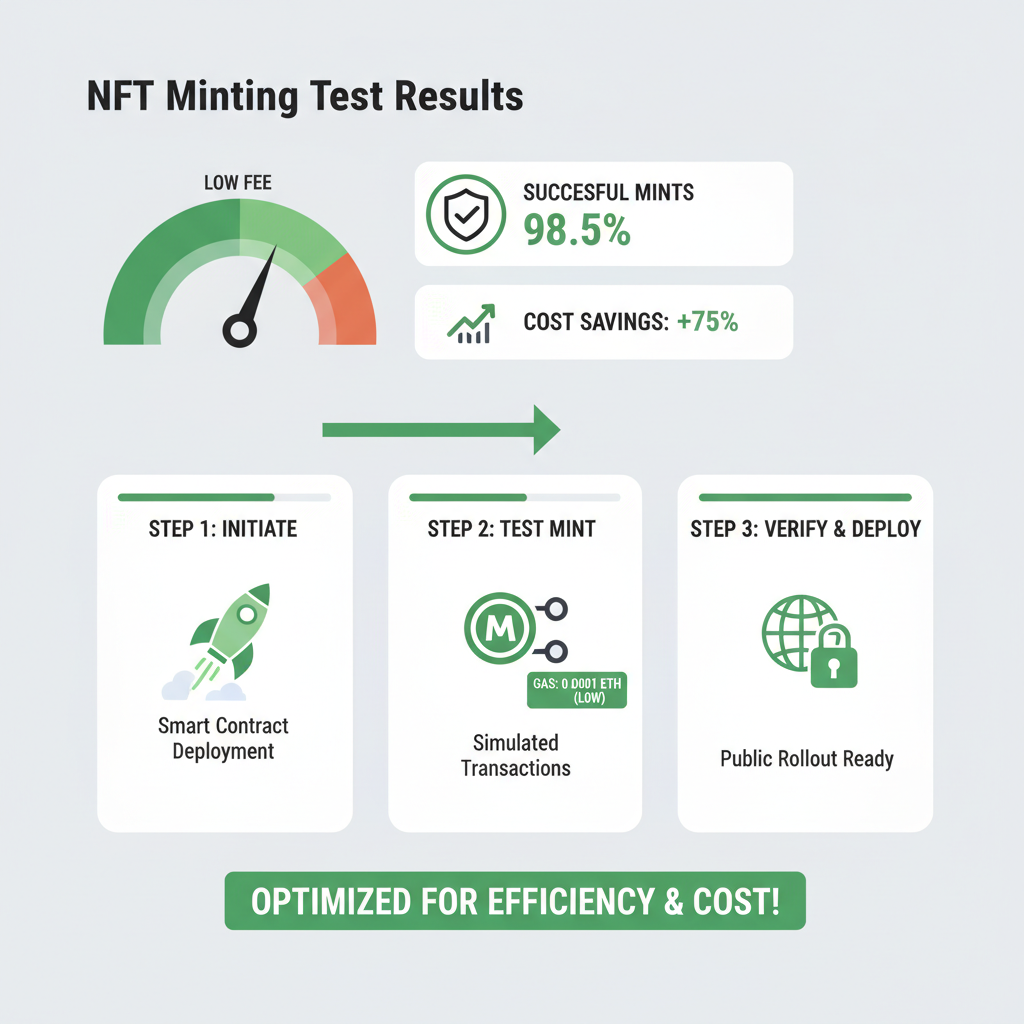
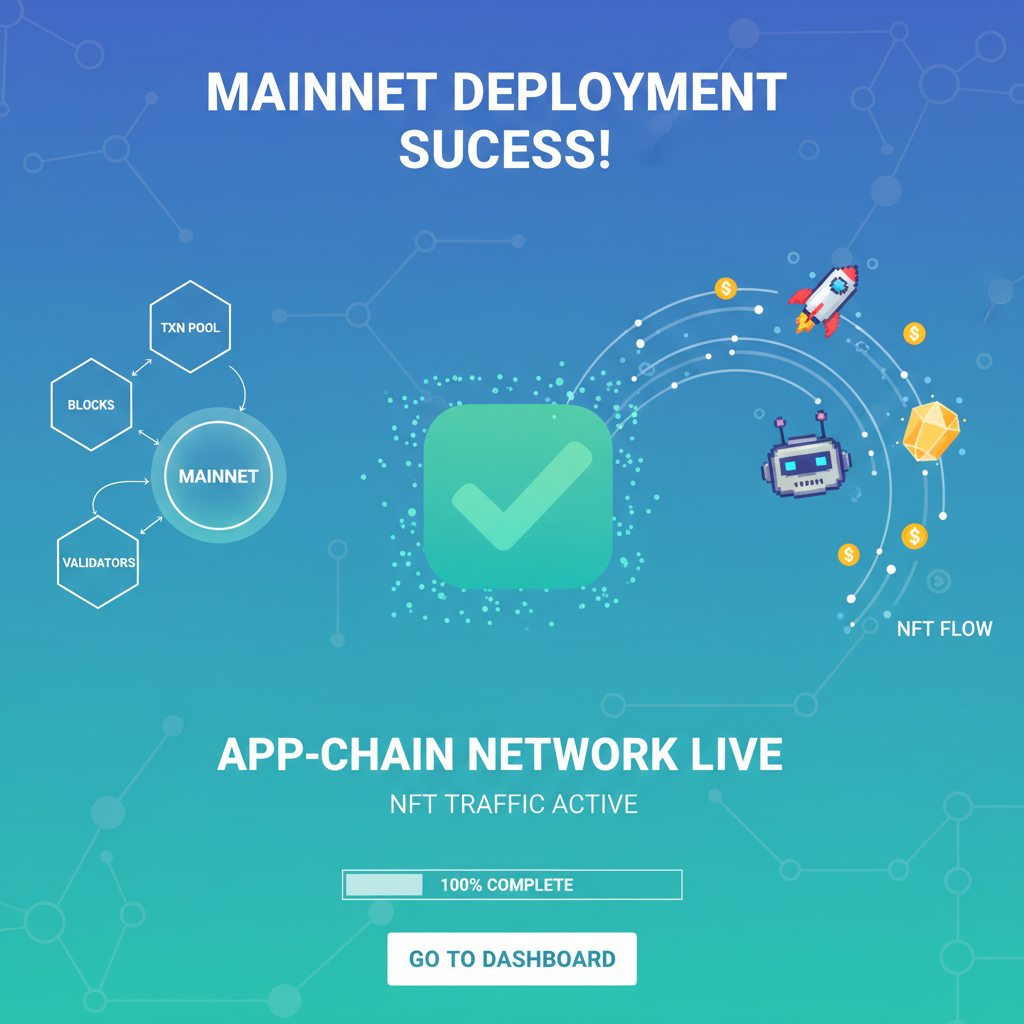
Once auctions hum, NFT contracts gain breathing room. Dynamic NFTs, as ND Labs details, update traits on-chain, reflecting game progress like upgraded weapons. Pair this with low-cost blockchain gaming via auctions, and drops become events players anticipate, not dread for fees. Foundation's dynamic pricing inspires here; rebate mechanisms ensure overpayments recycle, keeping net costs predictable.
A Sample Dynamic Fee Auction Mechanism
Picture the code backbone: a Solidity contract interfacing with the sequencer. Bidders stake tokens in a pool, revealing only at block close to prevent front-running. Winners pay the second-highest bid, Vickrey-style, promoting honest pricing. Chainlink's dynamic NFT examples extend to fees, minting privileges as burnable ERC-721s with embedded bids.
Solidity Contract: Dynamic Priority Fee Auction with Vickrey Settlement
In gaming app-chains, where low-cost NFT mints are crucial for smooth gameplay, a dynamic priority fee auction allows sequencers to efficiently allocate block space. We'll use a Vickrey (second-price sealed-bid) auction in Solidity. This encourages truthful bidding: the highest bidder wins priority but pays only the second-highest bid. Let's examine a foundational contract.
```solidity
pragma solidity ^0.8.20;

contract DynamicPriorityFeeAuction {
    uint256 public constant AUCTION_DURATION = 1 hours;
    uint256 public auctionStart;
    uint256 public auctionEnd;
    address public highestBidder;
    uint256 public highestBid;
    address public secondHighestBidder;
    uint256 public secondHighestBid;
    mapping(address => uint256) public pendingBids;
    bool public auctionActive = false;
    bool public settled = false;

    event BidSubmitted(address bidder, uint256 amount);
    event AuctionSettled(address winner, uint256 feePaid);

    modifier onlyDuringAuction() {
        require(auctionActive && block.timestamp <= auctionEnd, "Auction not active");
        _;
    }

    modifier onlyAfterAuction() {
        require(!auctionActive || block.timestamp > auctionEnd, "Auction still active");
        require(!settled, "Already settled");
        _;
    }

    function startAuction() external {
        require(!auctionActive, "Auction already active");
        auctionStart = block.timestamp;
        auctionEnd = block.timestamp + AUCTION_DURATION;
        auctionActive = true;
    }

    function submitBid() external payable onlyDuringAuction {
        uint256 bid = msg.value;
        require(bid > 0, "Bid must be greater than 0");

        pendingBids[msg.sender] += bid;

        if (bid > highestBid) {
            secondHighestBid = highestBid;
            secondHighestBidder = highestBidder;
            highestBid = bid;
            highestBidder = msg.sender;
        } else if (bid > secondHighestBid) {
            secondHighestBid = bid;
            secondHighestBidder = msg.sender;
        }

        emit BidSubmitted(msg.sender, bid);
    }

    function settleAuction() external onlyAfterAuction {
        settled = true;
        auctionActive = false;

        // Vickrey settlement: winner pays second highest bid
        uint256 feeToPay = secondHighestBid > 0 ? secondHighestBid : 0;
        if (address(this).balance >= feeToPay) {
            // In practice, transfer fee to sequencer or treasury
            // payable(highestBidder).transfer(pendingBids[highestBidder] - feeToPay);
            // Refund others
            emit AuctionSettled(highestBidder, feeToPay);
        }
    }

    // Simplified refund function (call after settlement)
    function withdraw() external {
        require(settled, "Not settled yet");
        uint256 amount = pendingBids[msg.sender];
        if (msg.sender == highestBidder) {
            amount -= secondHighestBid; // Already accounted fee
        }
        pendingBids[msg.sender] = 0;
        payable(msg.sender).transfer(amount);
    }
}
```
This example demonstrates bid submission during the auction window and Vickrey settlement at the end. The `highestBidder` gains sequencer priority (e.g., front-running NFT mints), paying the `secondHighestBid` as the fee. In production, enhance with full refunds, oracle integration for sequencer enforcement, reentrancy guards, and bid commitments for security. Experiment with it on a testnet to see how it reduces costs for high-volume gaming transactions.
This isn't theory; Instadnodes spotlights dApps thriving on rollups as a service, where minting costs plummet. Artists mint collections without gas eclipsing sales, fostering vibrant marketplaces. Rain Infotech forecasts 2025 benefits: seamless blockchain integration, superior UX, diversified monetization through fee shares to DAOs.
Security anchors it all. Errna's player-owned ecosystems stress audited contracts for in-game assets, utility beyond speculation. During mints, auctions throttle spam, prioritizing genuine players. I've watched equities evolve; blockchain gaming mirrors this, rewarding fundamentals over hype. Custom rollups NFT mints democratize access, turning casual gamers into owners without wallet-draining barriers.
Scaling Drops and Player Economies
Live drops test resilience. Thousands vie for alpha skins; auctions allocate slots fairly, fees adjusting to clear the queue without surges. Polygon and Arbitrum prove L2 viability with near-zero fees, but app-chains add game-specific optimizations like trait randomization on mint. HashLips Academy's video on dynamic mint prices adapts contracts for variable floors, syncing with auction outcomes.
Monetization evolves too. Sequencer revenue from tips funds game treasuries, buybacks, or burns, aligning incentives. Blockchain Development Company's guide on NFT marketplaces highlights drops management; infuse auctions for frictionless launches. Rapid Innovation's dev tutorial covers full-stack scaling, backend handling auction states, frontend visualizing bid standings.
Challenges persist: sequencer centralization risks MEV exploitation. Mitigate with decentralized sequencers or frequent L1 settlements. Chainstack's five-step minting simplifies deployment, but auctions add a sixth: bid calibration via off-chain simulators. Patience here yields edges; rushed launches falter under load.
Gaming app-chains redefine scalability. Dynamic priority fee auctions aren't just cost-cutters; they're economic engines, fueling player-owned worlds where mints empower rather than exclude. As infrastructure matures, expect widespread adoption, blending creativity with capital efficiency for the next era of decentralized play.




No comments yet. Be the first to share your thoughts!