


In a blockchain landscape where Ethereum trades at $2,023.26 after a 24-hour gain of and $134.20 ( and 0.0710%), developers face a stark choice: compete in a crowded priority fee auction or secure dedicated lanes via custom app-chains. Ethereum’s EIP-1559 mechanism burns a demand-driven base fee while letting users bid priority tips for validator attention, but this shared model falters under load. Custom app-chains flip the script with reserved computation lanes, offering predictable, low-cost execution tailored to high-stakes apps like HFT and gaming.

Picture this: during peak congestion, your DeFi arbitrage bot on Ethereum spikes its priority fee from pennies to dollars just to land in the next block. Validators, driven by selfish incentives, prioritize the fattest tips, as noted in Ethereum Stack Exchange discussions on gas premiums. Meanwhile, platforms like SKALE deploy custom app-chains with zero gas fees and instant finality, handing dApps like StrayShot and Exorde full governance and throughput control. This isn’t just cost savings; it’s a paradigm shift in specialized fee markets.
Ethereum Priority Fees: A Volatile Auction for Block Space
Ethereum’s fee market, refined by EIP-1559, splits costs into a base fee – algorithmically adjusted and burned to deflate ETH supply – plus an optional tip. At today’s $2,023.26 ETH price, a 24-hour high of $2,113.04 underscores market volatility that amplifies fee unpredictability. Users signal urgency via tips; higher bids mean faster inclusion, but during surges, even substantial premiums can lag behind MEV bots or HFT rigs optimized for microsecond edges.
Consider high-frequency trading on blockchains: infrastructure like dedicated clusters and real-time feeds, as detailed in RPC Fast analyses, demands consistency Ethereum struggles to deliver. Solana enthusiasts tout Raiku’s edge compute for deterministic execution, mimicking Web2 speeds with modular fast lanes. Yet Ethereum’s EVM ensures identical results across nodes, a reliability boon for autonomous agents per arXiv papers. The catch? Priority fees turn execution into a pay-to-win lottery, where low bidders watch opportunities evaporate.
Miners should still prefer higher gas premium transactions over those with a lower gas premium, purely from a selfish mining perspective.
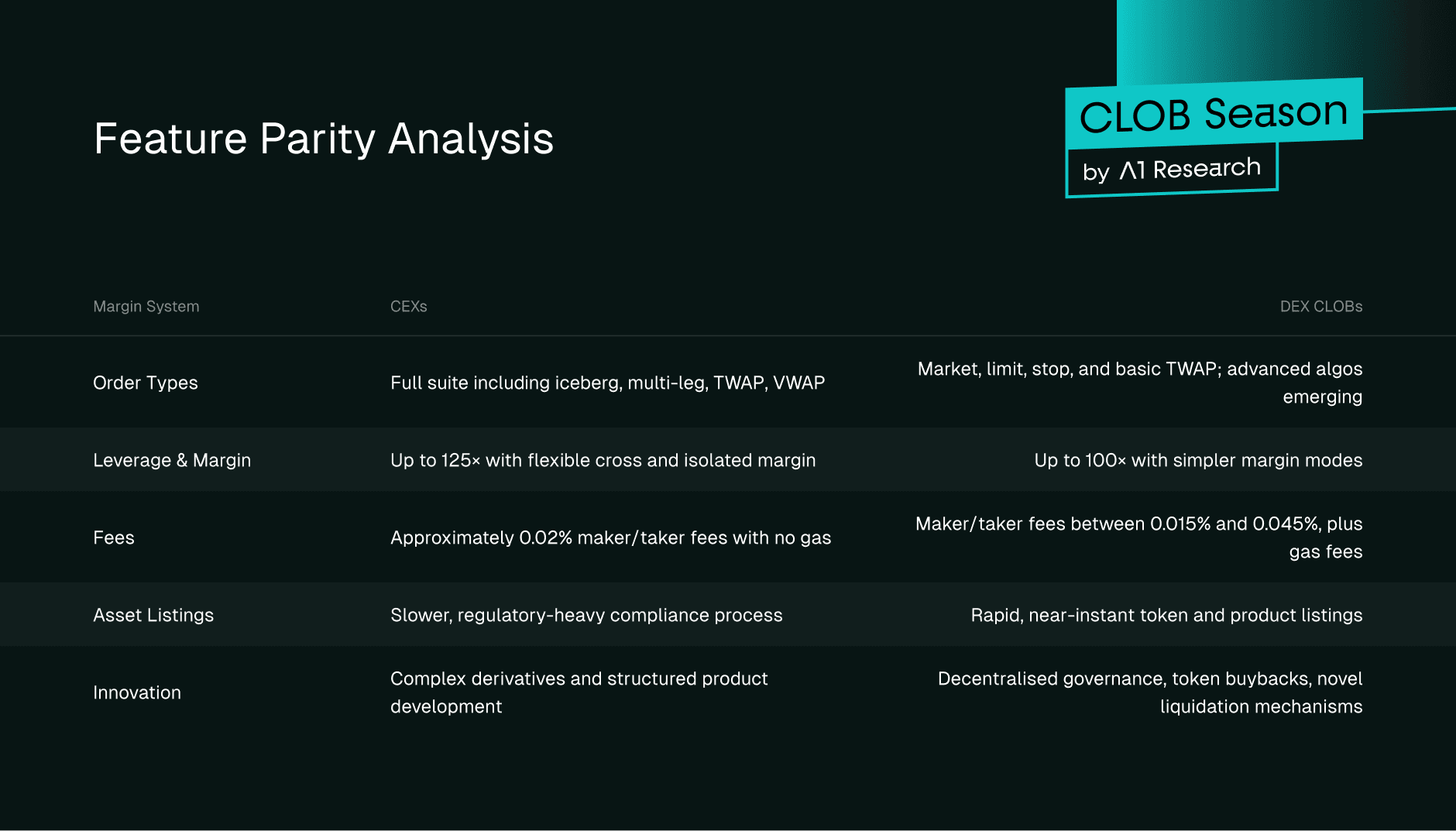
This dynamic suits general-purpose chains but chokes specialized workloads. CLOB DEXs, buzzing in GSR_io tweets, flock to cheaper layers at $0.07 per MB – a 55x Ethereum discount – highlighting the pain of shared resources.

Dissecting Fee Structures: Predictability vs Flexibility
Stack them side-by-side: Ethereum’s priority fees excel in flexible, shared environments but expose users to congestion spikes. At $2,023.26 ETH, a modest tip might suffice in lulls, yet 24-hour lows near $1,886.99 signal fee volatility risks. Custom app-chains counter with fixed, near-zero costs and reserved slots, perfect for blockchain HFT fees where latency kills profits.
SUI, Solana, Ethereum comparisons from XBTFX reveal next-gen chains prioritizing speed over generality. SKALE’s model reduces not just fees but uncertainty, enabling bolder app-chain fee optimization. For cost-sensitive CLOBs or edge compute, dedicated lanes win; Ethereum retains the edge for broad liquidity pools.
Ethereum (ETH) Price Prediction 2027-2032
Short-term outlook factoring EIP-1559 fee market dynamics, priority fees, and competition from custom app-chains like SKALE and high-performance networks like Solana
| Year | Minimum Price | Average Price | Maximum Price | YoY Change % (Avg) |
|---|---|---|---|---|
| 2027 | $1,800 | $2,800 | $4,000 | +38% |
| 2028 | $2,200 | $4,000 | $6,000 | +43% |
| 2029 | $3,000 | $5,500 | $9,000 | +38% |
| 2030 | $4,000 | $8,000 | $13,000 | +46% |
| 2031 | $5,500 | $11,000 | $18,000 | +38% |
| 2032 | $7,000 | $15,000 | $25,000 | +36% |
Price Prediction Summary
Despite competition from zero-fee app-chains and faster alternatives like Solana, Ethereum’s established ecosystem, EIP-1559 deflationary mechanics, Layer 2 scaling, and DeFi dominance support progressive growth. Average prices are projected to rise from $2,800 in 2027 to $15,000 by 2032, with min/max reflecting bearish (market corrections, competition) and bullish (adoption surges, upgrades) scenarios based on current $2,023 baseline.
Key Factors Affecting Ethereum Price
- EIP-1559 base fee burns creating deflationary pressure amid priority fee competition
- Rise of custom app-chains (e.g., SKALE) offering zero gas fees and dedicated throughput for gaming/AI
- Layer 2 scaling solutions alleviating congestion and reducing effective fees
- Competition from high-performance chains like Solana and SUI impacting market share
- Institutional adoption, regulatory clarity, and macroeconomic cycles
- Ethereum upgrades (e.g., danksharding, Verkle trees) enhancing scalability
- Persistent DeFi, NFT, and emerging AI agent use cases driving demand
Disclaimer: Cryptocurrency price predictions are speculative and based on current market analysis.
Actual prices may vary significantly due to market volatility, regulatory changes, and other factors.
Always do your own research before making investment decisions.
Yet the real test lies in hybrid futures: can Ethereum’s priority system evolve to match reserved lanes’ determinism? Early signs from SUAVE suggest mempool innovations ahead, but for now, custom app-chains carve out niches Ethereum’s auction can’t touch.
Developers optimizing for blockchain HFT fees already know the drill: Ethereum’s tip-based sorting favors the aggressive bidder, but custom app-chains like those on SKALE deliver reserved computation without the gamble. In high-frequency setups, where Rust and C and and coders chase microsecond latencies per Jung-Hua Liu’s insights, dedicated chains eliminate priority fee roulette. Solana’s edge via Raiku offers a taste – deterministic execution in fast lanes – but lacks Ethereum’s EVM reproducibility for agentic apps.
Use Cases Demanding Reserved Lanes: HFT, Gaming, AI Pipelines
High-frequency trading bots thrive on predictability. Ethereum’s $2,023.26 price tag amplifies every satoshi in tips; a 24-hour swing from $1,886.99 lows tests risk models. Custom app-chains sidestep this with zero-fee execution, letting algorithms focus on alpha extraction, not auction survival. Gaming dApps like StrayShot scale to thousands of TPS with instant finality, dodging Ethereum’s congestion blackouts.
AI workloads push further: reserved lanes handle compute-intensive inference without validator whims. Autonomous agents, as arXiv outlines, demand EVM-like determinism; SKALE bridges this with app-specific governance, slashing costs 55x below Ethereum’s per-MB rates that CLOB DEXs lament. Solana’s low-latency blueprint inspires, yet custom chains tailor fees precisely – fixed subscriptions or usage tiers – optimizing for erratic loads.
Ethereum Priority Fees vs. Custom App-Chains (SKALE)
| Fee Model | Latency Predictability | Cost at ETH $2,023.26 | HFT Suitability | Gaming TPS | |
|---|---|---|---|---|---|
| Ethereum Priority Fees | EIP-1559: Base Fee (burned) + Priority Tip 💰 | Variable ⏳ (12s+ blocks, congestion spikes) |
Variable $5-100+/tx 🚨 (peaks during demand) |
Moderate 🟡 (MEV risks, high tips needed) |
15-45 TPS 🎮 |
| Custom App-Chains (SKALE) | Zero Gas Fees 🚀 | High – Instant Finality ⚡ (Deterministic execution) |
$0 (55x savings vs. ETH) 💸 (~$0.07/MB for CLOBs) |
Excellent 🟢 (Dedicated fast lanes) |
2,000+ TPS 🔥 |
From my vantage as a volatility specialist, Ethereum’s fee spikes mirror options implied vol – sharp, asymmetric risks that erode edges. Custom setups enforce app-chain fee optimization, akin to hedging with dedicated liquidity pools.
Risk Management in Fee Markets: Smart Risk, Tailored Rewards
FRM certification drilled this home: unmanaged tail risks bankrupt strategies. Ethereum’s priority fees expose users to surge pricing, where a 24-hour high of $2,113.04 ETH tempts overbidding. Custom app-chains mitigate via reserved slots – think capacity booking, not blind auctions. For HFT, this means consistent block inclusion; for AI, uninterrupted pipelines.
SUAVE’s plug-in mempools hint at Ethereum upgrades, decentralizing builders beyond selfish mining. But execution lags: why bid when you can own the lane? Solana’s Helius overview praises its efficiency, yet custom chains eclipse with zero fees and sovereignty. At $2,023.26 ETH, the math favors migration for niche loads – reclaim margins lost to tips.
Pragmatism dictates hybrids: route HFT to app-chains, liquidity to Ethereum. Platforms evolve – Raiku’s modular compute on Solana previews reserved determinism everywhere. Developers, audit your stacks: if priority fees devour 20% of yields, reserved lanes beckon. The blockchain trilemma bends toward app-specific scalability, rewarding those who spec fee markets like volatility regimes.
With ETH steady at $2,023.26 post its and $134.20 day, the window narrows. Build custom; bid less; compute more.
About the Author