

Enterprises pushing the boundaries of digital transformation are hitting a wall with general-purpose blockchains. Congestion on networks like Ethereum throttles throughput to mere dozens of transactions per second during peak times, rendering them inadequate for high-volume operations such as supply chain tracking or real-time financial settlements. Customizable AppChains flip this script by delivering over 10,000 TPS, tailored precisely to business demands without the baggage of shared infrastructure.

Why Enterprises Demand AppChains Over Shared L1s
Picture a global manufacturer needing to process millions of IoT sensor updates daily. Shared Layer 1 networks buckle under such loads, spiking fees and delaying confirmations. AppChains sidestep this by dedicating an entire chain to one application or enterprise, optimizing every layer from consensus to execution. Unlike rollups, which batch transactions onto a base layer and inherit its bottlenecks, AppChains grant sovereignty: custom consensus, fee models, and even tokenomics aligned with corporate governance.
This sovereignty isn’t just theoretical. Frameworks from Cosmos SDK to Substrate enable rapid deployment of enterprise appchains, where developers tweak parameters for sub-second finality and predictable costs. Dr. Ravi Chamria’s analysis underscores this: AppChains excel when sovereignty trumps composability, ideal for permissioned enterprise use cases where data privacy reigns supreme.
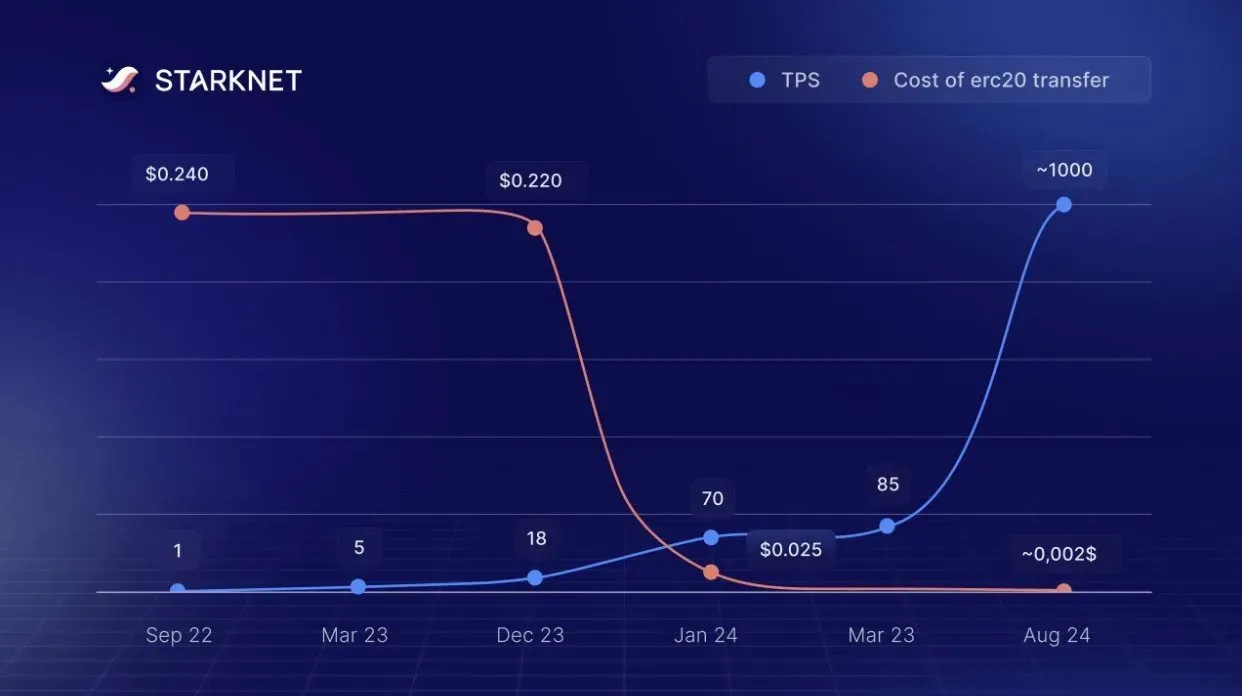
Breakthrough Architectures Powering 10,000 and TPS
Recent innovations prove AppChains aren’t hype. ENI’s Layer 1 architecture stands out, blending a three-layer composite consensus with a Zero-Knowledge coprocessor to hit 10,000 TPS while bolstering privacy. This isn’t piecemeal scaling; it’s a holistic redesign tackling the blockchain trilemma head-on.
Coinbase’s Base Appchains take it further into Layer 3 territory, letting developers spin up dedicated blockspace with custom gas tokens. High-traffic dApps, think gaming or DeFi portals for corporates, scale seamlessly without parent chain drag. Meanwhile, platforms like Zeeve and Kaleido democratize this power. Zeeve supports everything from Polygon Supernets to Avalanche L1s, offering low-code paths to high TPS custom rollups that enterprises can fine-tune for compliance-heavy sectors like finance or healthcare.

These aren’t isolated experiments. Deloitte’s Web3 adoption insights highlight how such tailored stacks bridge enterprise hesitations, turning blockchain from a buzzword into a operational backbone.
Tailored Fee Markets: The Economic Edge for Enterprises
Scalability alone doesn’t cut it; economics must align. Specialized fee markets appchains introduce dynamic pricing tied to business logic, not blind auctions. Imagine fees pegged to enterprise tokens, ensuring cost predictability even at peak loads. This contrasts sharply with L1 gas wars, where enterprises foot unpredictable bills.
Zeeve’s custom-fit blockchains exemplify this, allowing governance over token economies that incentivize validators aligned with corporate SLAs. Kaleido adds Web3 orchestration, integrating appchains with legacy systems for hybrid models where blockchain handles high-throughput ledgers privately. a16z crypto warns against forcing corporates into public chains; AppChains respect their need for control, fostering genuine adoption.
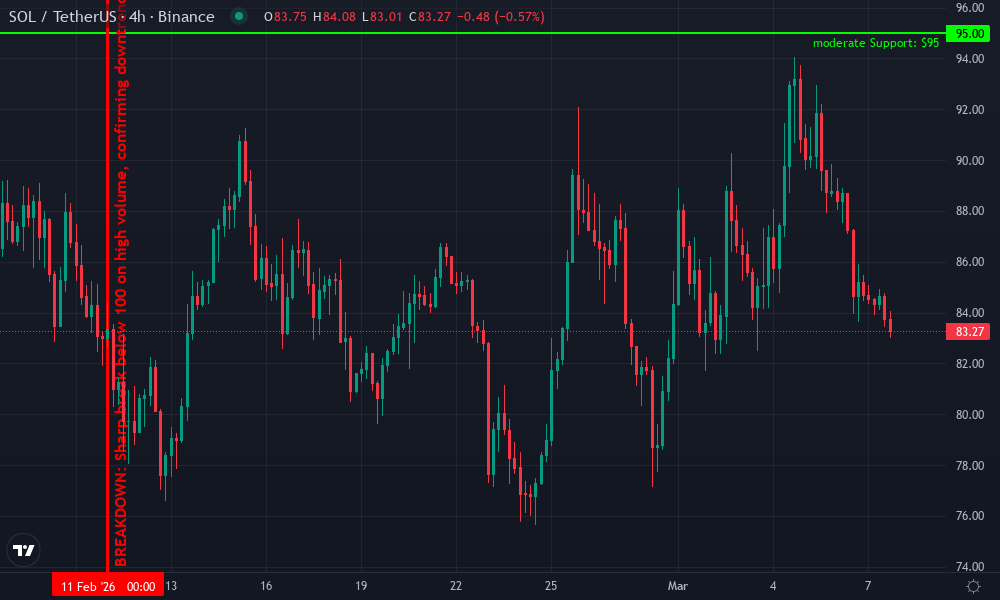
Solana Technical Analysis Chart
Analysis by Evan Bristow | Symbol: BINANCE:SOLUSDT | Interval: 4h | Drawings: 8
Technical Analysis Summary
To precisely annotate this SOLUSDT chart in my balanced, data-driven style: 1. Draw a primary downtrend line connecting the swing high on 2026-01-22 at 106.50 to the recent low on 2026-02-11 at 98.20, extending forward for projection. 2. Add horizontal lines for support at 98.00 (strong, recent lows) and 95.00 (moderate, psychological); resistance at 105.00 (moderate, recent rejection) and 108.00 (strong, prior peak). 3. Rectangle the consolidation zone from 2026-01-17 (101.20) to 2026-01-29 (99.80) to highlight distribution. 4. Callout on volume bars from 2026-02-04 to 2026-02-11 noting ‘climax selling volume’. 5. Arrow_mark_down on MACD bearish crossover around 2026-02-04. 6. Text labels for entry zone at 98.50 (‘Swing long entry’) and exits. 7. Vertical line at 2026-02-11 for breakdown event. This setup provides clarity for swing trades with medium risk.
Risk Assessment: medium
Analysis: Bearish trend with volume confirmation raises caution, but oversold signals and key support suggest controlled swing opportunity
Evan Bristow’s Recommendation: Monitor 98 support for long entry with 1:2 RR; avoid aggressive shorts—precision over speculation.
Key Support & Resistance Levels
📈 Support Levels:
-
$98 – Cluster of recent candle lows and volume support
strong -
$95 – Psychological level and extension of downtrend projection
moderate
📉 Resistance Levels:
-
$105 – Recent swing highs and failed retest zone
moderate -
$108 – January peak resistance with prior rejection
strong
Trading Zones (medium risk tolerance)
🎯 Entry Zones:
-
$98.5 – Bounce from strong support with volume divergence potential
medium risk
🚪 Exit Zones:
-
$105 – Initial profit target at moderate resistance retest
💰 profit target -
$96 – Tight stop below recent lows to manage downside
🛡️ stop loss
Technical Indicators Analysis
📊 Volume Analysis:
Pattern: Climax selling on downside acceleration
Volume spikes coincide with red candles from Feb 4-11, indicating distribution but possible exhaustion
📈 MACD Analysis:
Signal: Bearish crossover
MACD line crossed below signal line around Feb 4, with histogram contracting—momentum fading
Applied TradingView Drawing Utilities
This chart analysis utilizes the following professional drawing tools:
Disclaimer: This technical analysis by Evan Bristow is for educational purposes only and should not be considered as financial advice.
Trading involves risk, and you should always do your own research before making investment decisions.
Past performance does not guarantee future results. The analysis reflects the author’s personal methodology and risk tolerance (medium).
Cross-industry data from MDPI reinforces the potential: DeFi and gaming’s data deluge previews enterprise volumes, where AppChains’ parallelism shines, processing transactions in isolated execution environments for unmatched efficiency.
Enterprises aren’t waiting for general-purpose chains to evolve; they’re building their own lanes. QuickNode’s breakdown of AppChains and Rollups-as-a-Service nails it: customization trumps compromise when staking high-stakes operations on predictable performance. BaaS platforms offer quick starts, but custom blockchains like those from Zeeve hand over the reins on consensus and token economies, crucial for regulated industries.
Enterprise AppChains in Action: Metrics That Matter
Let’s quantify the shift. Platforms topping 10,000 TPS aren’t outliers; they’re the new baseline for serious scalability. ENI’s ZK-enhanced consensus delivers not just speed but verifiable privacy, vital for supply chains where provenance data can’t leak. Base Appchains, meanwhile, embed permissions natively, letting enterprises gatekeep access while scaling to viral user bases.
Comparison of Key AppChain Platforms vs Ethereum Rollups
| Platform | TPS | Customization | Sovereignty | Cost Predictability |
|---|---|---|---|---|
| ENI | 10,000+ | ZK privacy, three-layer consensus | Full (Independent L1) | High (Dedicated resources) |
| Base Appchains | High-throughput | Custom gas tokens, permissions (L3) | High (On Base) | Predictable (Low-cost blockspace) |
| Zeeve | 10,000+ capable | Multi-framework (Substrate, Cosmos SDK, Polygon Supernets, Avalanche L1s) | Full | Optimized & predictable |
| Kaleido | Highly scalable | Web3 integration, dApp tools | Full | Low & predictable gas fees |
| Ethereum Rollups | Limited (<10,000) | Limited (Shared infrastructure) | Low (L1 dependent) | Variable (Congestion & fees) |
This table underscores a hard truth: rollups excel in composability but falter under enterprise loads. AppChains prioritize isolation for enterprise appchains, where one application’s surge doesn’t cascade failures across unrelated users. Outlook India’s BaaS vs. custom analysis drives it home: full-spectrum control over governance principles separates viable enterprise solutions from plug-and-play pretenders.
Opinion: Rollups-as-a-Service from Alchemy or QuickNode lowers barriers, but for 10,000 and TPS, true AppChains demand bespoke engineering. CoinsBench’s 2025 watchlist spotlights Polygon and Avalanche subsets, but ENI’s composite mechanisms edge ahead in raw throughput.
Decision Framework: AppChains or Rollups?
Dr. Chamria’s framework cuts through the noise. Ask: Does your use case crave sovereignty over composability? Need tailored security or fee structures? Lean AppChain. Prioritize Ethereum liquidity? Rollup might suffice, but expect TPS ceilings. Enterprises blending both, via Zeeve’s hybrid deployments, capture the best: high TPS custom rollups settled on proven L1s.
a16z crypto’s caution resonates: protocol teams flop by shoving corporates onto public infra. Success brews when infrastructure mirrors enterprise DNA, private yet interoperable. Deloitte’s Web3 paper maps this evolution, positioning AppChains as the unlock for tokenization in supply chains or tokenized assets in finance.
Implementation demands pragmatism. Start with Kaleido’s orchestration for legacy bridges, layer in Zeeve for chain selection. Substrate or Cosmos SDK frameworks accelerate prototyping, hitting production in weeks, not years. The payoff? Sub-second finality for IoT swarms, fee predictability for treasury ops, sovereignty for compliance audits.
Mass adoption hinges on these proofs. MDPI’s cross-industry lens shows DeFi’s real-time analytics as a harbinger; enterprises will amplify that with proprietary data streams. Customizable AppChains don’t just scale; they redefine economic models, embedding specialized fee markets appchains that align incentives from validator to C-suite. Platforms like Base pioneer this with native gas tokens, insulating against crypto volatility.
The trajectory is clear. As 2025 platforms mature, expect enterprise appchains to proliferate, fragmenting L1 dominance while boosting overall ecosystem throughput. Builders opting for 10,000 TPS sovereignty today position for tomorrow’s data-intensive realities, where shared chains simply can’t compete.
About the Author