Choose your architecture model
Building custom app chains 2026 starts with picking the right foundation. Your choice determines how much control you keep versus how much security you borrow. The three main paths are dedicated L1s, shared security models, and L2 rollups.
A dedicated L1 gives you full sovereignty. You control the validator set, the tokenomics, and the upgrade schedule. This path suits projects that need unique consensus mechanisms or specific regulatory compliance. However, it requires significant capital to bootstrap security and attract validators.
Shared security models, such as those built on the Cosmos SDK or Polygon CDK, let you launch a chain with minimal infrastructure. You lease security from a larger network, which reduces startup costs and time-to-market. This is ideal for teams that want to focus on application logic rather than consensus engineering.
L2 rollups sit on top of existing mainnets like Ethereum. They inherit mainnet security while offering high throughput. This model is best for applications that need to tap into existing liquidity and user bases without building a new ecosystem from scratch.
Use the comparison below to weigh the trade-offs between cost, security, and speed.
| Model | Security Source | Startup Cost | Time to Market | Control Level |
|---|---|---|---|---|
| Dedicated L1 | Own validators | High | Months | Full |
| Shared Security | Parent network | Low-Medium | Weeks | Partial |
| L2 Rollup | Mainnet (e.g., Ethereum) | Medium | Weeks | Limited |
Select the right development framework
The framework you choose becomes the foundation for your custom app chains 2026 project. It dictates how easily you can write smart contracts, how you handle consensus, and whether you can launch quickly or need months of engineering. Most teams start by picking a framework that matches their existing skills and their need for interoperability.
Cosmos SDK
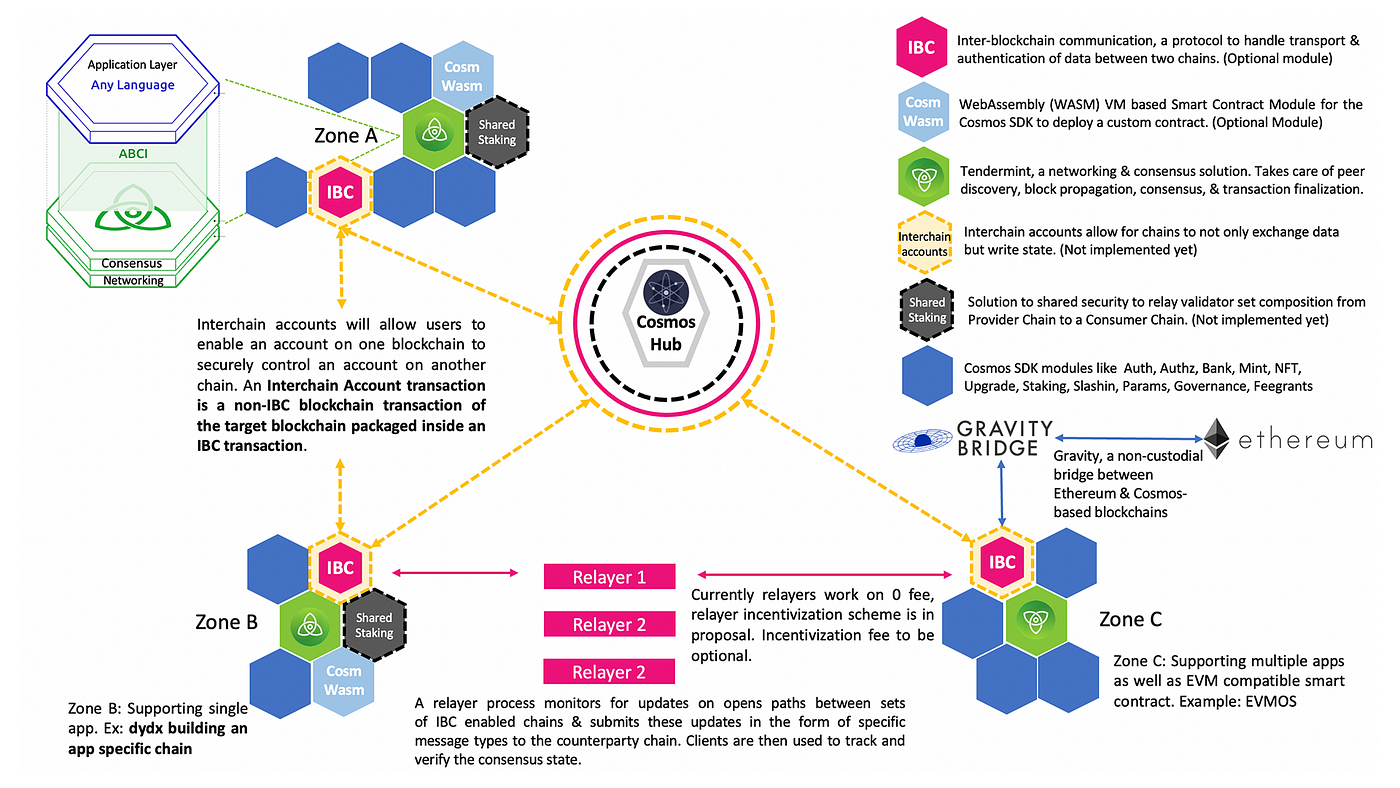
The Cosmos SDK is the most common choice for teams that prioritize interoperability. It uses the Inter-Blockchain Communication (IBC) protocol, allowing your appchain to talk to other chains in the Cosmos ecosystem natively. This is ideal if you want your application to tap into existing liquidity and user bases across multiple networks. However, the learning curve is steeper, and you must manage your own validator set and security model.
Polygon CDK
If you want to launch on the Ethereum ecosystem without managing heavy infrastructure, the Polygon Chain Development Kit (CDK) is a strong option. It allows you to spin up a custom chain that is compatible with the Ethereum Virtual Machine (EVM). This means you can use Solidity and your existing developer tools. The CDK simplifies the process of connecting to Polygon’s shared security and liquidity, making it a faster route to market for EVM-native projects.
Substrate
Substrate, built by Parity Technologies, is a modular framework for building custom blockchains from scratch. It offers extreme flexibility, letting you design your own consensus rules and runtime logic. This is the best choice for teams with specific, complex requirements that don’t fit standard models. The trade-off is significant complexity; you are essentially building a blockchain engine, which requires deep Rust expertise and more time to stabilize.
Choosing Your Path
Your decision should hinge on three factors: your team’s current tech stack, your need for external connectivity, and your timeline. If you know Solidity and want Ethereum compatibility, lean toward Polygon CDK. If you need a chain that communicates with many others, look at Cosmos. If you need total control over the protocol and have the engineering resources, Substrate is the path. Start by prototyping a simple node with your chosen framework to test the developer experience before committing to full production.
Configure consensus and tokenomics
Your custom app chains 2026 project needs two foundational pillars: a consensus mechanism that secures the network and a token design that sustains it. Get these wrong, and the chain becomes fragile or economically unviable.
Choose Your Consensus Mechanism
The consensus layer determines how nodes agree on the state of the blockchain. For most custom app chains, Proof of Stake (PoS) is the standard choice. It allows validators to secure the network by staking native tokens, offering a balance of security and energy efficiency. If your application requires high throughput and low latency, and you can tolerate a higher degree of centralization during the initial phase, Proof of Authority (PoA) might be more appropriate. PoA relies on a small set of pre-approved validators, simplifying the setup process.
When configuring your node software, ensure the consensus parameters align with your application's transaction volume. Overly aggressive block times can lead to network instability if validator hardware is insufficient. Start with conservative parameters and adjust based on real-world load testing.
Design Sustainable Tokenomics
Poor tokenomics design is the leading cause of appchain failure. Ensure your token captures value from the dApp, not just speculation.
Your token must have a clear utility within the ecosystem. Common utilities include paying for transaction fees, staking for governance, or accessing premium features. Avoid creating complex token models that confuse users. A single token that handles both governance and utility often works best for early-stage chains.
Consider the inflation schedule carefully. If you plan to reward early validators or developers, ensure the emission rate is sustainable and does not dilute value excessively. A deflationary mechanism, such as burning a portion of transaction fees, can help maintain token value over time. Remember that the primary goal of your custom app chains 2026 initiative is to support a specific application, so the token economy should directly serve that application's growth and stability.
Deploy and test your chain
Building custom app chains 2026 requires moving from configuration files to a live, verifiable network. This phase turns your design into a running protocol. You will spin up a testnet, verify consensus, and prepare the mainnet launch. Follow this sequence to avoid common deployment errors.

Start by launching your validator and non-validator nodes on a testnet environment. Use your chosen infrastructure provider to provision the servers. Ensure the genesis file matches your custom configuration exactly. Verify that all nodes can communicate and sync blocks before proceeding. This step isolates configuration errors from network-level issues.
Deploy your application smart contracts or modules to the testnet. Execute a full suite of integration tests to ensure the app interacts correctly with the chain state. Check for edge cases in transaction handling and state transitions. Use tools like Foundry or Hardhat to automate these checks. If tests fail, fix the code before moving to mainnet preparation.

Simulate real-world traffic by sending load to the testnet. Monitor block times, finality, and gas usage under stress. Ensure your consensus mechanism (e.g., Tendermint, BFT) handles validator failures gracefully. If the chain stalls or drops blocks, adjust your node resources or consensus parameters. This validation confirms your chain can handle production loads.

Once testnet validation passes, deploy the same configuration to your mainnet nodes. Double-check that the genesis file is immutable and correct. Activate the chain and monitor the first few blocks closely. Verify that explorers and RPC endpoints are public and responsive. Your custom app chain is now live and ready for users.
Implement interoperability protocols
Your custom app chains 2026 infrastructure is only as valuable as the data and assets it can move. Without interoperability, your chain risks becoming a siloed island, disconnected from the liquidity and user bases of the broader ecosystem. Implementing robust cross-chain protocols ensures that your application remains fluid and accessible.
Choose the right bridge protocol
Select a protocol that matches your chain’s architecture. For Cosmos SDK-based appchains, the Inter-Blockchain Communication (IBC) protocol offers native, trust-minimized connectivity. It allows your chain to send packets directly to other IBC-enabled chains without relying on centralized intermediaries. If you are building on EVM-compatible chains, consider Chainlink CCIP or LayerZero for broader compatibility across non-Cosmos networks. Evaluate each option based on latency, security model, and the number of supported chains.
Configure cross-chain messaging
Once you select a protocol, configure the messaging layer to handle both asset transfers and arbitrary data. This involves setting up relayers—external nodes that observe one chain and submit proofs on another—to ensure messages are delivered. Test the configuration with small transactions to verify that gas fees are calculated correctly and that state updates occur as expected. Proper configuration prevents stuck transactions and ensures your appchain can react to events on other networks in real-time.
App chain launch checklist
Before going live with your custom app chains 2026 infrastructure, run through this final verification sequence. This ensures your chain is secure, performant, and ready for users.
-
Validate consensus parameters and validator set
-
Testnet stress test with simulated user load
-
Verify gas fee mechanisms and tokenomics
-
Confirm block explorer and RPC endpoint availability
-
Audit smart contracts and bridge security
Ensure your testnet phase includes realistic traffic simulations. General-purpose chains often struggle under specific application loads; your custom app chains 2026 setup must handle your expected transaction volume without congestion.
Common app chain: what to check next
These answers address the most frequent technical and strategic hurdles teams face when building custom app chains in 2026.
What is an appchain?
An appchain is a blockchain built exclusively for one specific application or use case. Unlike general-purpose chains that host thousands of apps and compete for block space, an appchain operates independently. This isolation reduces congestion and lowers transaction costs for your users [Alchemy].
How do appchains differ from Layer 2s?
Layer 2s (L2s) are built on top of a mainnet like Ethereum and share its security model. Custom app chains are standalone networks that define their own validator set and security parameters. While L2s benefit from Ethereum’s security, appchains offer complete control over governance, tokenomics, and transaction finality [CoinGecko].
What are the main challenges in 2026?
The primary challenge is security. Running your own validator set requires significant operational overhead. Many teams now use modular stacks like Celestia for data availability or Tendermint for consensus to reduce the burden of securing the network from scratch.
Do appchains need their own token?
Not necessarily. While most appchains use a native token to pay for gas and secure the network, you can design a system where users pay fees in stablecoins or other assets. The token primarily serves to align incentives among validators and governance participants.
No comments yet. Be the first to share your thoughts!