What custom app chains actually are
Custom app chains are application-specific blockchains designed to dedicate their blockspace to a single use case. Unlike general-purpose Layer 1s that attempt to serve every possible application, an app chain is built from the ground up to support the unique requirements of one specific business or protocol. This specialization allows developers to customize execution environments, consensus mechanisms, and data availability without being constrained by the trade-offs of a shared network.
The distinction matters because shared networks often suffer from congestion and high fees when popular applications compete for the same resources. By isolating an application on its own chain, teams can ensure predictable performance and lower costs for users. This approach shifts the modular narrative: instead of forcing all activity onto a single monolithic ledger, developers can compose specialized chains that inherit security from larger networks while maintaining operational independence.
This model enables a more efficient allocation of blockspace. As the modular blockchain thesis gains traction, the ability to spin up dedicated infrastructure for high-throughput or privacy-sensitive applications becomes a standard part of the Web3 development toolkit. For a deeper technical breakdown of how these chains differ from traditional L1s, see Coinbase’s explanation of application-specific blockchains src-serp-1.
Why modular beats monolithic in 2026
The monolithic layer-1 model, which bundles execution, consensus, and data availability into a single chain, is hitting a hard ceiling. In 2026, developers are moving toward custom app chains because specialization solves the trilemma constraints that generic chains cannot. A monolithic chain must optimize for the lowest common denominator, forcing high-performance applications to compete for block space with low-value transactions. This congestion drives up fees and creates unpredictable latency, making it difficult to build consumer-grade dApps that require deterministic performance.
Modular infrastructure decouples these functions. By offloading data availability to dedicated layers and using specialized consensus mechanisms, app-specific chains can scale independently of the base layer. Frameworks like the Cosmos SDK and Substrate have matured to the point where launching a custom chain is no longer a heavy engineering lift. Instead, it is a configuration choice that allows teams to tailor gas models, validation sets, and security parameters to their specific user base.
The economic argument is equally compelling. Delphi Digital notes that application-specific blockchains generally result in more reliable fees and higher efficiency for their intended use cases. When a chain is dedicated to a single application, the tokenomics can be aligned directly with user activity rather than speculative trading volume. This alignment reduces the risk of fee market volatility and creates a more sustainable revenue model for validators and developers alike.
The shift is not just technical; it is strategic. As the ecosystem fragments, the value of having a dedicated network for a specific vertical—whether it is gaming, DeFi, or social—outweighs the convenience of a shared chain. Developers are prioritizing control over shared security, betting that the ability to customize every layer of the stack will win in a market where user experience is the primary differentiator.
Rollup-as-a-service platforms compared
Custom app chains require infrastructure that balances speed with control. Three providers dominate the current landscape for rapid deployment: Kaleido, Zeeve, and Syndicate. Each offers a distinct approach to managing the underlying nodes and SDKs.
Kaleido focuses on enterprise-grade stability. Their platform emphasizes high availability, promising a 99.9% uptime SLA for both public and permissioned networks. This makes them a strong candidate for financial applications where downtime is unacceptable. You can manage nodes directly through their console, reducing the operational overhead of self-hosting.
Zeeve positions itself as a plug-and-play solution for developers. Their infrastructure is designed for instant launch, offering a suite of dev tools that abstract away much of the complex node management. If your priority is getting a custom chain online quickly with minimal configuration, Zeeve provides the most straightforward path to deployment.
Syndicate takes a different approach by solving the composability problem. Historically, custom chains operated in silos, unable to easily interact with other ecosystems. Syndicate breaks this isolation, allowing appchain developers to maintain full customization while still composing with other networks. This is critical for 2026, where cross-chain liquidity is a primary requirement.
| Provider | Best For | Key Feature | SLA / Uptime |
|---|---|---|---|
| Kaleido | Enterprise Stability | Node Management & 99.9% SLA | 99.9% |
| Zeeve | Rapid Deployment | Plug-and-Play Dev Tools | Information insufficient |
| Syndicate | Composability | Cross-Chain Interaction | Information insufficient |
These platforms remove the need to build infrastructure from scratch. They allow teams to focus on the application logic rather than the consensus layer. Choose based on whether your priority is stability, speed, or composability.
How custom app chains secure their state
Custom app chains must choose how they protect their data and validate transactions. This decision defines the chain’s trust model and determines who can challenge invalid blocks. The three main approaches are settling on Ethereum, sharing security with a larger network, or running an independent validator set.
Settling on Ethereum
Many app chains use Ethereum as their settlement layer. In this model, the app chain handles execution locally but posts state roots to Ethereum. If a dispute arises, Ethereum’s consensus rules act as the final arbiter. This approach offers strong security guarantees because it inherits Ethereum’s vast network of validators and economic stakes.
StarkWare describes app chains as customizable L2s that inherit the security of the layer they settle on [[src-serp-4]]. By relying on Ethereum for finality, app chains can offer lower fees and higher throughput while maintaining a high bar for security. This is the most common model for new modular blockchains.
Shared security
Shared security allows smaller chains to borrow security from a larger, established network without building their own validator set. The most prominent example is Celestia’s EigenLayer integration, where restaked ETH secures data availability and potentially consensus for app chains. This model reduces the barrier to entry for new projects, as they do not need to bootstrap a large set of validators.
However, shared security introduces complexity. If the underlying network (like Ethereum) experiences a major fault or slashing event, it can cascade down to the app chains relying on it. Projects must carefully weigh the convenience of borrowed security against the risk of correlated failures.
Independent validator sets
Some app chains choose to maintain their own validator sets, often using Proof-of-Stake with a limited number of validators. This approach offers maximum customization and sovereignty. The chain is not dependent on the health or governance of a larger network. However, it also means the chain is responsible for its own security budget. If the token price drops or validator participation wanes, the chain becomes vulnerable to attacks.
Independent security is best suited for chains with strong economic incentives or those backed by well-funded entities willing to subsidize validator rewards during early stages. Without these, the chain may struggle to attract enough honest actors to secure the network.
Best tools for launching an app chain
Building a custom app chain requires selecting infrastructure that balances flexibility with security. Developers typically choose between modular frameworks like Cosmos SDK and Substrate, which offer extensive customization, or specialized launchpads that handle the underlying node management. The right tool depends on whether you need full control over consensus rules or prefer a faster time-to-market.

The Cosmos SDK is a modular framework for building independent blockchains. It provides pre-built modules for staking, governance, and token transfers, allowing developers to assemble a chain by combining these components. This approach is ideal for projects requiring high interoperability within the Cosmos ecosystem.
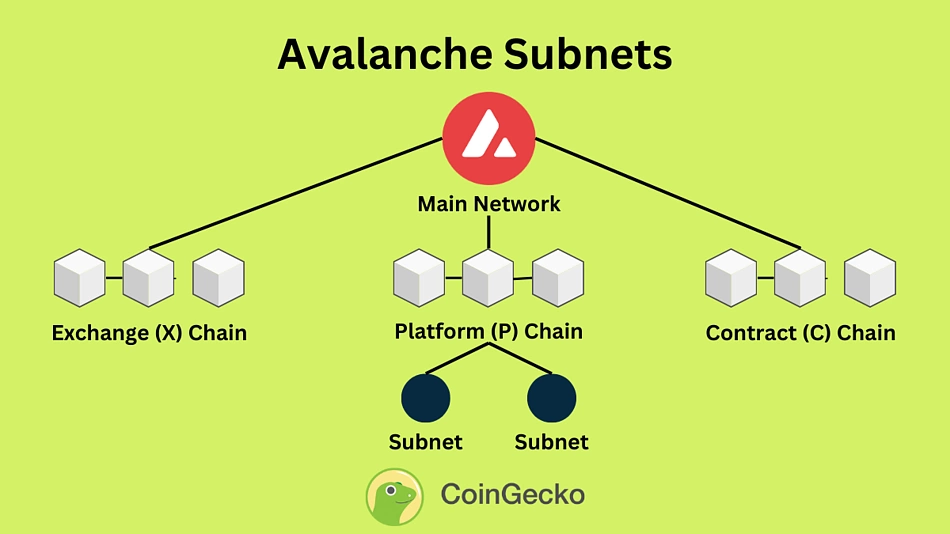
Substrate is a Rust-based framework for building custom blockchains. It offers a high degree of flexibility, enabling developers to modify consensus mechanisms and runtime logic. While it has a steeper learning curve, it is the preferred choice for teams needing deep customization of the underlying protocol.

Platforms like Chainstack or Alchemy provide managed infrastructure for deploying app chains. These services abstract away the complexity of node maintenance and scaling, allowing developers to focus on application logic. They are suitable for teams that prioritize speed and operational efficiency over low-level protocol control.


As an Amazon Associate, we may earn from qualifying purchases.
Common questions about app chains
Custom chains can't easily compose with others. That's the tradeoff—but Syndicate breaks it by giving appchain developers full customization while maintaining interoperability. This solves the isolation problem that has historically hindered modular blockchain adoption.
Do app chains inherit security from their base layer?
Security models vary by architecture. Some frameworks allow app chains to inherit consensus security from the base layer, while others require independent validator sets. Always check the specific framework's documentation to understand the security trade-offs.
Can app chains communicate with other blockchains?
Interoperability is a key focus for 2026 app chain development. Most modern frameworks support cross-chain messaging protocols, allowing assets and data to move between the app chain and the broader ecosystem. This composability is essential for building scalable decentralized applications.
Are app chains more expensive to run than standard dApps?
App chains offer dedicated resources, which can reduce congestion costs during high demand. However, running a full node or managing validators requires more infrastructure than deploying a smart contract on a shared L1. The cost-benefit analysis depends on your expected transaction volume.
No comments yet. Be the first to share your thoughts!