
Defining Sovereign App Chains
An appchain is a blockchain built to operate a single application, rather than hosting multiple apps on a shared network. This architectural shift moves away from the general-purpose model used by traditional Layer 1s and Layer 2s. Instead of competing for block space with unrelated transactions, an appchain dedicates its entire infrastructure to one specific use case.
This specialization allows developers to customize every layer of the stack. They can choose their own consensus mechanism, select specific hardware, and design tokenomics that align directly with the application's needs. As noted by Alchemy, this exclusivity ensures that the chain's resources are never diluted by unrelated traffic [Alchemy]. CoinGecko adds that these chains are built to handle specific tasks more efficiently than general-purpose chains [CoinGecko].
The tradeoff is clear: sovereignty comes with operational responsibility. While a Layer 2 inherits security from its base Layer 1, an appchain must secure its own validator set. This means developers take on the full burden of network security and node management. However, for high-stakes infrastructure where predictable latency and isolated risk are paramount, this tradeoff often justifies the added complexity.
This distinction is critical for 2026 infrastructure planning. As transaction volumes on shared networks fluctuate, the predictable performance of a sovereign appchain becomes a competitive advantage. The market is moving toward modular solutions where each application runs on its own dedicated chain, ensuring that one app's congestion never impacts another's performance.
App chains versus L1s and L2s
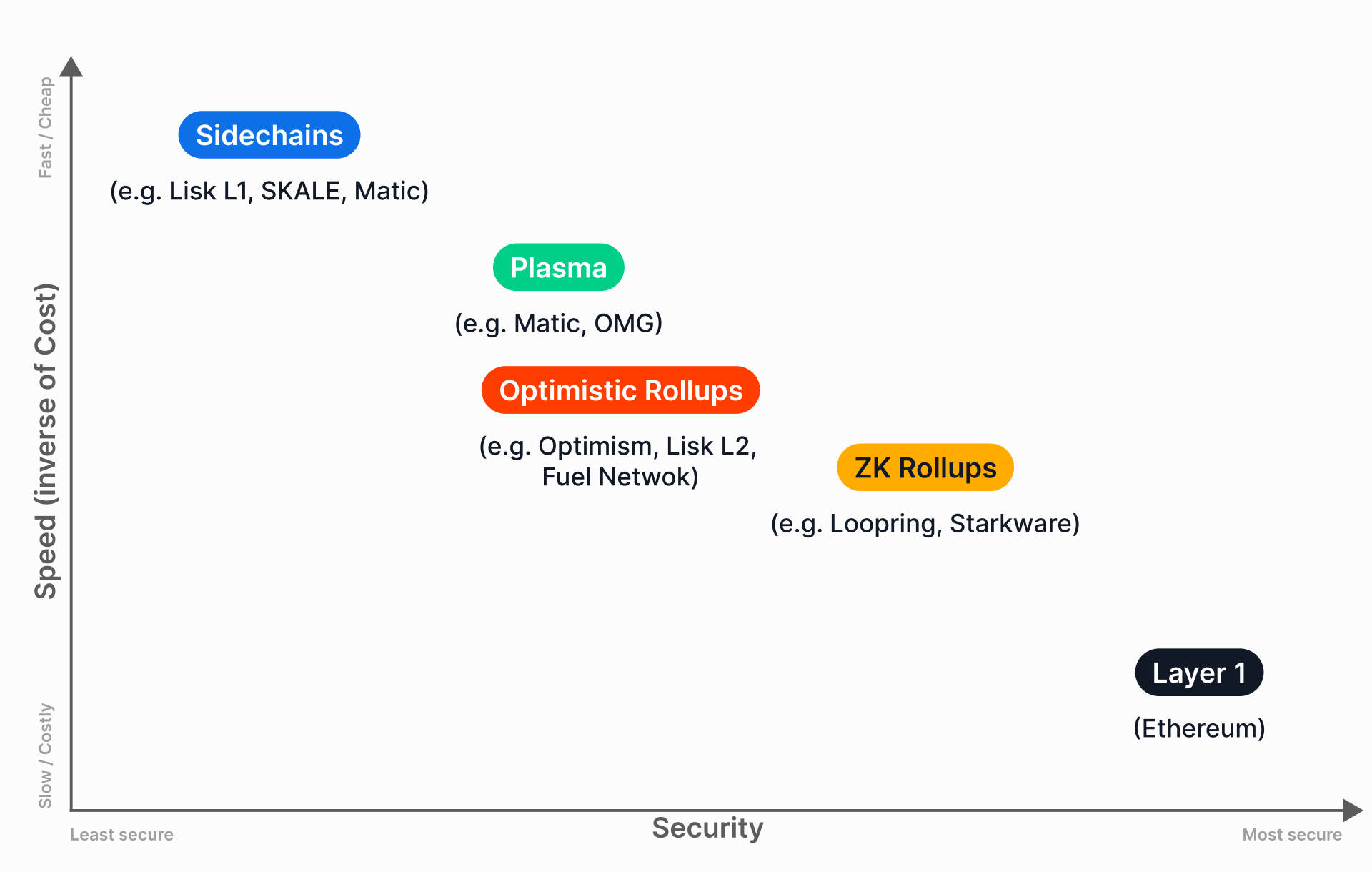
Choosing between a dedicated app chain, a Layer 1 (L1), or a Layer 2 (L2) is a fundamental architectural decision that dictates your project’s scalability, security model, and operational independence. While L1s offer maximum security through shared consensus and L2s provide high throughput by inheriting Layer 1 security, app chains represent a distinct paradigm: sovereign infrastructure designed for a single application.
An app chain is a blockchain exclusively designed to operate one specific application, rather than hosting multiple competing apps [1]. This specialization allows developers to customize every layer—from consensus algorithms to gas tokenomics—without compromising the performance of other users. In contrast, L1s and L2s are general-purpose infrastructures where resources are shared and contested. The tradeoff is clear: app chains demand higher operational overhead and initial capital to bootstrap security, but they offer unmatched flexibility and isolation from network congestion.
The following comparison outlines the core architectural differences across key metrics relevant to infrastructure planning.
| Metric | App Chain | Layer 1 (L1) | Layer 2 (L2) |
|---|---|---|---|
| Security Model | Independent consensus; bootstrapping required | Shared, high-cost security (e.g., Ethereum PoS) | |
| Customization | Full control over VM, gas, and state | Limited by base protocol rules | |
| Throughput | Optimized for specific app workload | Constrained by global block space | |
| Cost Efficiency | High fixed cost; low marginal cost | High marginal cost during congestion | |
| Complexity | High (node management, validator hiring) | ||
| Low (deploy contract only) | |||
| Medium (bridge security, sequencer risk) |
For applications requiring strict data sovereignty or unique economic incentives, an app chain is often the superior choice. Platforms like Avalanche offer custom subnet architectures that allow apps to define their own chain rules while maintaining interoperability with the broader network [3]. This approach is increasingly standard for new chains launching in 2026 that prioritize long-term viability over quick deployment. However, for projects where speed-to-market is critical and standard transactional throughput is sufficient, L2s on established L1s remain the pragmatic default. The decision ultimately hinges on whether your application’s value proposition relies on shared security or bespoke control.
Sovereign infrastructure costs
Building a custom app chain is not merely a software deployment; it is a capital-intensive infrastructure play. Unlike deploying a smart contract on an existing L1, launching a sovereign chain requires securing dedicated node capacity, validator sets, and often specialized RPC endpoints. The financial implications are substantial, shifting the cost structure from variable transaction fees to fixed, high-stakes operational expenditures.
The baseline cost involves securing the network's security budget. Whether you are running a Cosmos SDK chain or a Polygon CDK instance, you must pay for the computational power that keeps the chain online and secure. This includes dedicated servers for validators and indexer nodes, which scale linearly with data growth. For high-throughput applications, this infrastructure bill can quickly exceed the costs of the development team itself.
To understand the magnitude of these operational costs, it is helpful to look at the broader market for blockchain infrastructure services. The price of raw compute and specialized blockchain nodes fluctuates with market demand, reflecting the high stakes of maintaining uptime and security.
The tradeoff is clear: you pay a premium for sovereignty. By owning the stack, you avoid the congestion and unpredictable gas fees of shared networks. However, this requires a significant upfront investment in both engineering talent and dedicated hardware. For most teams, the decision to build an app chain is a bet on long-term scalability that only pays off when transaction volume justifies the fixed overhead.
Use cases for dedicated networks
Custom app chains move beyond generic layer-2 scaling to address specific architectural constraints that shared networks cannot satisfy. When an application requires unique consensus mechanisms, isolated data sovereignty, or distinct tokenomic models, a dedicated network becomes the only viable infrastructure choice. This section outlines the primary scenarios where this investment yields a competitive advantage.
Gaming and Real-Time Applications
Blockchain games demand sub-second finality and high throughput that shared chains often throttle during peak congestion. A custom app chain allows developers to optimize block production for specific game logic, ensuring a seamless user experience without paying for unused network capacity. This isolation prevents game transactions from competing with unrelated DeFi activity, stabilizing latency and costs.
Financial Services and Compliance
Institutional finance requires strict data residency and regulatory compliance that public chains struggle to guarantee. Sovereign app chains enable organizations to control validator sets and enforce permissioned access, satisfying audit requirements while maintaining blockchain benefits. This setup is critical for asset tokenization, where legal frameworks often mandate that data remain within specific jurisdictional boundaries.
Specialized Data and AI Integration
Applications processing large datasets or integrating with off-chain AI models benefit from the flexibility of custom virtual machines. Developers can tailor the execution environment to handle complex computations or store heavy metadata without bloating the base layer. This specialization reduces gas fees for data-heavy operations and allows for more efficient state management.

Planning your app chain launch
Building a custom app chain is a high-stakes infrastructure decision that demands rigorous evaluation before committing capital. In 2026, the barrier to entry has lowered, but the operational burden of sovereignty remains high. Teams must distinguish between genuine scalability needs and the allure of technical control.
Determine if your current layer is genuinely constraining growth. If transaction fees or latency are manageable, a custom chain adds unnecessary complexity. Reserve app chains for workloads where throughput is the primary constraint.
Sovereignty means you own the security model. Without shared security or robust validator sets, your chain is only as strong as its smallest participant. Evaluate whether you can sustain a secure validator network or if you should leverage a shared security model.
Infrastructure costs extend beyond initial deployment. Factor in node maintenance, security audits, and ongoing operational overhead. If the cost of running sovereign nodes exceeds the value of the data or transactions processed, the architecture is economically unsound.
Sovereign chains risk becoming isolated silos. Plan for cross-chain communication early using standardized bridges or messaging protocols. Without a clear path for asset and data movement, your app chain will struggle to attract liquidity and users.
This checklist serves as a preliminary filter. If your project fails any of these checks, consider modular scaling solutions or layer-2 integrations before pursuing a full custom chain build.
Common questions about app chains
Developers often conflate the cost and complexity of building a custom application with the infrastructure requirements of an app chain. While general mobile app development in 2026 can range from $10,000 to $500,000 depending on complexity and team location, app chains introduce distinct capital and technical overheads. The primary difference lies in the need for sovereign node infrastructure and consensus layer configuration rather than just client-side logic.
How much does it cost to build an app chain?
The cost structure shifts from pure software development to infrastructure management. While a standard web app might rely on centralized hosting, an app chain requires dedicated validator nodes, bridge security audits, and tokenomic design. Initial setup costs are higher due to the complexity of configuring frameworks like Cosmos SDK or Substrate, but long-term operational costs can be lower for high-throughput applications that avoid congested shared Layer 1 networks.
How to start developing an app chain in 2026?
Starting an app chain requires a structured validation process similar to traditional software development but with added cryptographic rigor. The initial steps involve validating the economic incentive model and defining the specific state machine requirements. From there, developers must select a modular framework, design the consensus mechanism, and implement rigorous testing protocols for bridge security and node synchronization before any mainnet deployment.
No comments yet. Be the first to share your thoughts!