What makes a custom app chain different
An app chain, or application-specific blockchain, is a dedicated ledger built to handle the unique requirements of a single application. Unlike generic layer-2 networks that share resources among many unrelated projects, an app chain dedicates its blockspace to one specific use case. This specialization allows developers to customize the consensus mechanism, gas models, and data availability layers to fit their exact needs.
This approach contrasts sharply with monolithic chains, where all applications compete for the same limited blockspace. On a monolithic network, a spike in activity from one popular game or protocol can congest the entire chain, driving up fees for everyone. App chains avoid this by isolating traffic. If your application experiences a surge in users, only your chain feels the impact, not the broader ecosystem.
The result is more reliable fees and higher throughput. By tailoring the infrastructure to the application, developers can optimize for speed, privacy, or cost without compromising the performance of other users. For 2026, as decentralized applications become more complex and user-heavy, this isolation is no longer a luxury—it is a necessity for sustainable scaling.
Top platforms for launching sovereign blockchains
Building a custom app chain requires choosing the right infrastructure partner. The leading providers—Kaleido, Zeeve, StarkWare, and Syndicate—offer distinct tools for deploying sovereign blockchains. Each platform targets specific development needs, from enterprise-grade stability to zero-knowledge scaling.
Kaleido
Kaleido provides enterprise-grade blockchain infrastructure with a focus on reliability. Their platform supports public chains and permissioned networks, offering a 99.9% uptime SLA for node management. This makes it a strong choice for organizations requiring high availability and strict operational standards.
Zeeve
Zeeve emphasizes speed and ease of use with plug-and-play developer tools. Their AppChain platform allows teams to launch custom blockchains instantly without managing complex underlying infrastructure. This approach reduces time-to-market for developers who want to focus on application logic rather than node maintenance.
StarkWare
StarkWare specializes in zero-knowledge (ZK) technology, enabling customizable Layer 2 solutions. Their app chains inherit the security of the underlying settlement layer while providing high throughput. This platform is ideal for projects that prioritize scalability and cryptographic security over simple transaction processing.
Syndicate
Syndicate focuses on application-centric chains, allowing developers to customize network economics and governance. Their stack supports the creation of tailored blockchain environments for specific use cases, such as tokenized assets or decentralized communities. This flexibility makes it suitable for projects with unique economic models.
| Provider | Core Stack | Primary Focus |
|---|---|---|
| Kaleido | Multi-chain | Enterprise SLA |
| Zeeve | Plug-and-play | Speed to Deploy |
| StarkWare | ZK-Rollups | Scalability |
| Syndicate | Custom SDKs | Economic Customization |
Choosing the right stack for your use case
Selecting a blockchain framework is less about finding the "best" technology and more about matching your application's specific needs to the right infrastructure. There is no single solution that handles every scenario. Some projects prioritize developer velocity and EVM compatibility, while others demand absolute control over consensus mechanisms or ultra-low transaction costs.
The decision usually falls into two broad categories: modular frameworks that offer flexibility, or specialized stacks designed for specific execution environments. Your choice will dictate your security model, scalability limits, and how easily you can onboard new users.
Cosmos SDK and Substrate: Flexibility and Modularity
Cosmos SDK and Substrate are the go-to choices when your application requires a custom consensus mechanism or unique tokenomics. These frameworks provide modular building blocks, allowing you to swap out components like networking, state machine, and consensus engines. This modularity is ideal for projects that need to integrate with existing ecosystems or require bespoke governance structures.
Cosmos SDK is particularly strong for projects that value interoperability through the Inter-Blockchain Communication (IBC) protocol. It allows your chain to communicate seamlessly with other chains in the Cosmos ecosystem. Substrate, built with Rust, offers similar flexibility but with a stronger emphasis on performance and parallel execution. Both require a deeper understanding of blockchain architecture but offer the highest degree of customization.
OP Stack and ZK Stacks: Security and Scalability
If your primary concern is inheriting the security of a major base layer while maintaining scalability, rollup-based stacks are the better fit. The OP Stack, developed by Optimism, allows developers to launch Layer 2 chains that settle on Ethereum. This approach provides robust security guarantees and access to Ethereum's liquidity, making it suitable for DeFi applications and high-throughput consumer apps.
Zero-Knowledge (ZK) stacks, such as those offered by StarkWare or Polygon, focus on cryptographic proofs to achieve scalability. These stacks are ideal for applications that require near-instant finality and extremely low transaction fees. While the development complexity is higher due to the constraints of zk-SNARKs or zk-STARKs, the resulting performance benefits are significant for high-volume use cases.
Making the Final Decision
Your choice should align with your team's technical expertise and your application's long-term goals. If you need deep customization and ecosystem integration, look toward Cosmos or Substrate. If you prioritize security, liquidity, and ease of onboarding from existing Ethereum users, rollup-based solutions like the OP Stack or ZK stacks are more appropriate. Consider starting with a testnet deployment to validate your stack's performance under real-world conditions before committing to a mainnet launch.
Infrastructure tools for app chain development
Building a custom app chain requires specialized infrastructure that bridges the gap between abstract blockchain theory and deployable code. Instead of managing complex node clusters from scratch, developers now rely on "AppChains-as-a-Service" platforms. These tools provide plug-and-play development environments, allowing teams to spin up application-specific blockchains with enterprise-grade reliability.
Kaleido and Zeeve
Kaleido and Zeeve stand out as primary infrastructure providers for this use case. Kaleido offers a managed environment with a 99.9% uptime SLA, enabling teams to deploy public chains or permissioned networks without deep DevOps overhead. Zeeve similarly focuses on speed, offering instant launch capabilities through its infrastructure platform. These services abstract the complexity of consensus mechanisms and networking, letting developers focus on the application logic rather than the underlying protocol.
Essential Development Resources
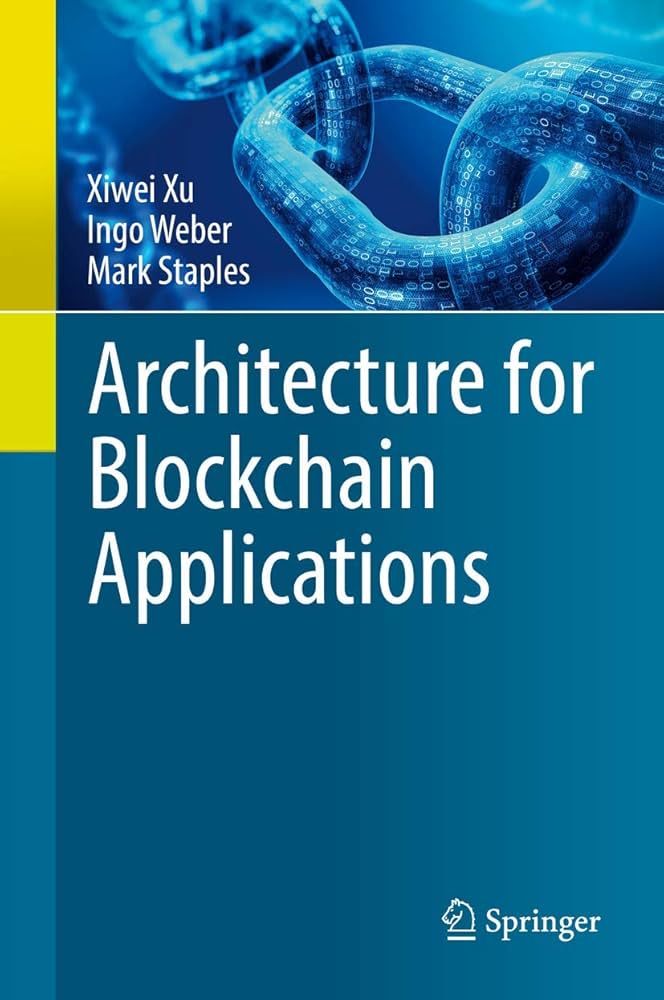
While cloud infrastructure handles the deployment, successful app chain development still requires a solid understanding of blockchain architecture. The following resources provide the foundational knowledge needed to design and optimize custom chains.


As an Amazon Associate, we may earn from qualifying purchases.
Frequently asked questions about app chains
What are app chains?
An AppChain, short for "application-specific blockchain," is a tailored solution specifically designed to meet the unique task requirements of a decentralized application or web3 protocol. Unlike general-purpose blockchains that force all applications to compete for the same resources, an AppChain provides dedicated infrastructure. This allows developers to customize consensus mechanisms, security models, and tokenomics to fit their specific use case without being constrained by the limitations of a broader network.
How do app chains differ from standard Layer 2s?
While both aim to improve scalability, standard Layer 2s (L2s) typically share the same underlying security and consensus layer as the main chain, often resulting in shared congestion during peak times. App chains operate as independent networks. This independence means that one application's traffic spikes do not impact the performance of others. For infrastructure providers, this distinction is critical: L2s offer shared security at a lower cost, while app chains offer dedicated performance and full sovereignty over the chain's parameters.
Are app chains secure?
Security in app chains depends on the infrastructure tool you choose. Standalone app chains manage their own validator sets, which can be less secure than a shared L2 if not properly incentivized. However, many modern app chain frameworks, such as those built on Cosmos SDK or Polygon CDK, allow developers to leverage shared security models or connect to robust validator networks. The key is selecting a provider that offers flexible security options, ensuring your chain remains resilient against attacks while maintaining the performance benefits of isolation.
No comments yet. Be the first to share your thoughts!