Defining the custom app chain 2026 landscape
An application-specific blockchain, or appchain, is a blockchain exclusively designed to operate one specific application instead of multiple apps. This architecture marks a distinct shift from the general-purpose Layer 1 models that dominated early blockchain adoption. In 2026, enterprises are moving away from shared, congested networks toward modular, application-specific architectures that offer tailored functionality and optimized performance for vertical-specific needs.
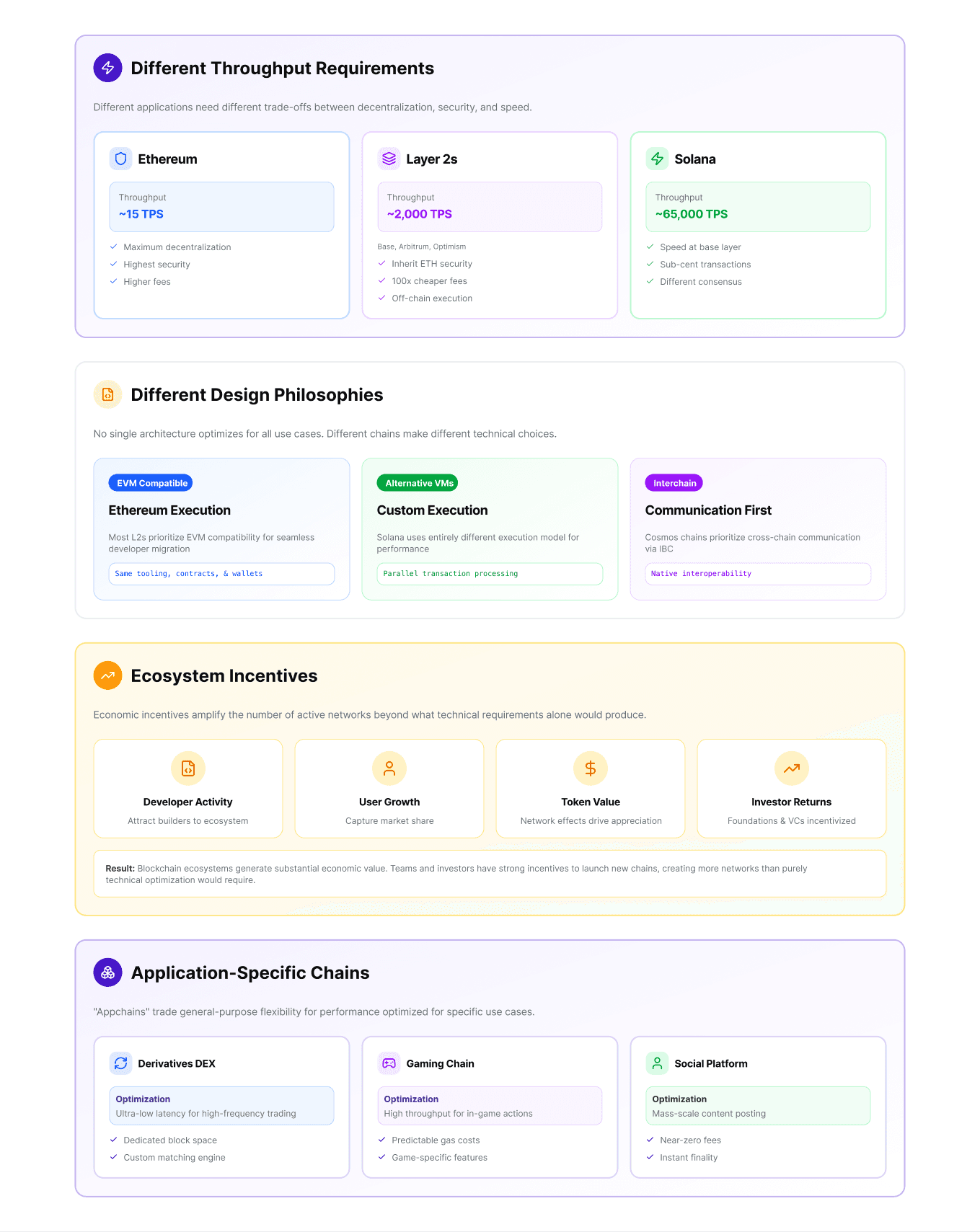
Unlike general-purpose blockchains, appchains operate independently. This independence reduces congestion, lowers transaction costs, and enhances scalability for the specific use case. While some frameworks describe appchains as customizable Layer 2 solutions that inherit security from a base layer, the defining characteristic remains their singular focus. They are not sidechains or generic L2s; they are independent chains optimized for a single application's logic and data.
The 2026 landscape reflects a maturation of this technology. Enterprises no longer view blockchain as a monolithic infrastructure layer but as a suite of specialized tools. By isolating application logic, organizations can achieve the performance and cost-efficiency required for high-volume, mission-critical operations without compromising on the security guarantees provided by the underlying settlement layer.
Selecting the right framework for 2026
Choosing between Cosmos SDK, Substrate, and Avalanche Subnets requires aligning technical capabilities with enterprise compliance and operational goals. Each framework offers distinct advantages for appchain deployment, particularly regarding language preference, security isolation, and interoperability.
The following comparison evaluates these three leading modular blockchain frameworks based on criteria relevant to enterprise architecture decisions in 2026.
| Feature | Cosmos SDK | Substrate | Avalanche Subnets |
|---|---|---|---|
| Primary Language | Go (Golang) | Rust | Go (Golang) |
| Interoperability | IBC Protocol | XCM Protocol | AWM (AppChain Messaging) |
| Security Model | Shared Security (optional) | Independent Validator Set | Independent Validator Set |
| Enterprise Readiness | High (Mature Ecosystem) | High (Flexible Runtime) | High (Cloud-Native) |
Cosmos SDK appeals to teams prioritizing the Inter-Blockchain Communication (IBC) protocol for cross-chain asset transfers. Its Go-based foundation supports a mature ecosystem of modules, making it suitable for regulated financial applications requiring predictable consensus mechanisms.
Substrate offers maximum flexibility through its modular runtime. Built on Rust, it allows enterprises to customize consensus and state transitions at a low level. This approach is ideal for organizations with existing Rust engineering talent or those requiring highly specialized cryptographic primitives.
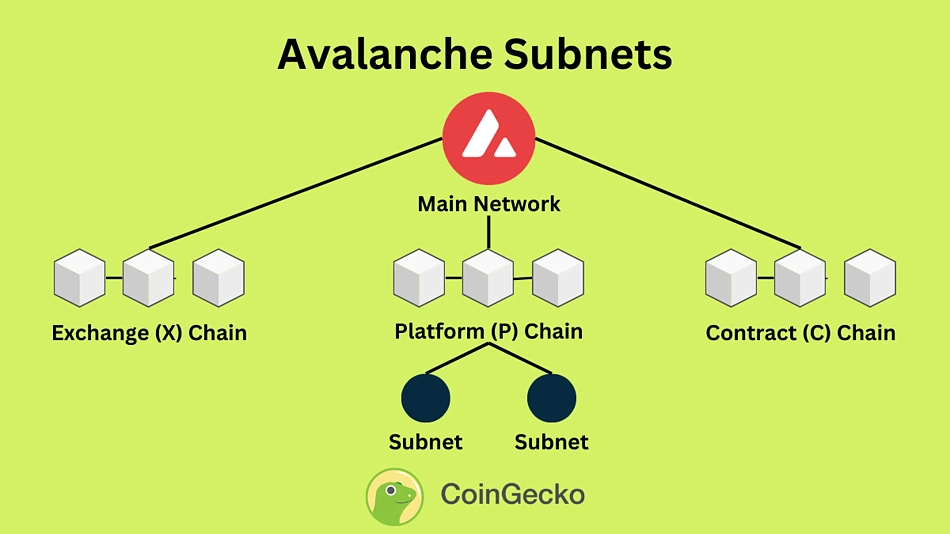
Avalanche Subnets provide a cloud-native deployment model with instant finality. They operate as independent networks on the Avalanche mainnet, offering robust security isolation. This structure minimizes the operational overhead of managing validator sets while maintaining strict compliance boundaries for sensitive data.
Mapping vertical use cases to chain design
Custom app chains are not a one-size-fits-all solution. Each industry has unique regulatory, performance, and data sovereignty requirements that dictate how a chain must be configured. A finance chain prioritizes finality and compliance, while a supply chain chain emphasizes traceability and IoT integration. Healthcare applications require strict data partitioning to meet privacy standards like HIPAA. Understanding these distinctions is the first step in selecting the right architecture.
Financial Services: High Throughput and Compliance
Financial institutions require chains that can handle high transaction volumes with instant finality. The primary concern is regulatory compliance, which often necessitates permissioned nodes or zero-knowledge proofs to verify transactions without exposing sensitive data. Chains like Solana and Base offer the throughput needed for real-time settlements, but enterprise deployments often layer on identity verification protocols. The configuration must support audit trails that satisfy jurisdictional requirements, making the underlying consensus mechanism a critical design choice.
Supply Chain: Traceability and IoT Integration
Supply chain app chains focus on proving the origin and movement of goods. These chains integrate with IoT devices to automatically record data at each step, from manufacturing to delivery. The design prioritizes interoperability, allowing different stakeholders—suppliers, logistics providers, and retailers—to access relevant data without compromising the entire network. Polygon and Avalanche are often chosen for their ability to handle low-cost micro-transactions from connected devices. The chain must be structured to ensure data immutability while allowing for efficient querying of historical records.
Healthcare: Data Privacy and Partitioning
Healthcare applications demand strict data isolation to protect patient information. App chains in this sector often use sharding or sidechains to separate sensitive medical records from general transaction data. Compliance with regulations like HIPAA and GDPR is non-negotiable, requiring robust access controls and encryption. The chain configuration must support selective disclosure, where patients can grant temporary access to specific providers. This level of granularity is difficult to achieve on general-purpose blockchains, making custom app chains essential for healthcare innovation.
Compliance and security in 2026 deployments
Building a custom app chain requires more than technical performance; it demands a framework that withstands regulatory scrutiny and security audits. In 2026, enterprise deployment hinges on aligning chain architecture with specific jurisdictional mandates before writing a single line of code.
Data residency and privacy regulations remain the primary compliance hurdle. General-purpose blockchains often struggle with GDPR’s "right to be forgotten" because data is immutable. Custom app chains solve this by isolating sensitive personal data off-chain or using zero-knowledge proofs, ensuring that on-chain records contain only necessary hashes. For CCPA compliance, enterprises must verify that their node operators adhere to strict data handling protocols, particularly when nodes are distributed across multiple countries.
Financial regulations require rigorous identity integration. If your app chain handles value transfers, it must integrate KYC/AML checks at the gateway or wallet level, not just at the exchange. This means designing smart contracts that can pause transactions or flag addresses linked to sanctioned entities without compromising the entire network’s availability.
Security is equally critical. Custom chains introduce unique attack surfaces, particularly in their consensus mechanisms and bridge connections. Regular smart contract audits by reputable firms are non-negotiable. Additionally, node operators must enforce strict access controls and monitor for consensus attacks, such as 51% attacks, which are more feasible against smaller, newer chains.
-
Verify data residency requirements for all target jurisdictions
-
Integrate KYC/AML checks at the wallet or gateway level
-
Conduct third-party smart contract audits before mainnet launch
-
Establish node access controls and monitoring protocols
By addressing these compliance and security layers early, enterprises can deploy app chains that are not only efficient but also legally defensible and robust against threats.
Implementation timeline and milestones
Enterprise deployment of custom app chains requires a structured approach to manage technical complexity and regulatory compliance. This timeline outlines the standard progression from initial proof-of-concept to mainnet launch, typically spanning four quarters. Stakeholders should treat these milestones as baseline expectations rather than fixed deadlines, as infrastructure readiness and audit cycles often dictate the final pace.
Begin by defining the specific application requirements and selecting a suitable infrastructure provider. The goal is to build a minimal viable proof-of-concept (PoC) to validate the consensus mechanism and data throughput. This phase focuses on technical feasibility rather than production readiness, allowing teams to identify architectural bottlenecks early in the custom app chain development process.
Once the PoC is validated, select the core framework (e.g., Cosmos SDK, Substrate, or Polygon CDK) and finalize the tokenomics model. This stage involves detailed system design, including identity management, governance structures, and cross-chain interoperability protocols. Teams must also begin preliminary compliance reviews to ensure the custom blockchain aligns with relevant data protection regulations.

The development phase shifts to building the full application layer and deploying a public testnet. This is the critical period for stress-testing the network under simulated load and inviting external developers to interact with the protocol. Continuous integration and deployment pipelines are established to ensure code stability. Security teams conduct initial code audits on the smart contracts and core node software to mitigate early-stage vulnerabilities.
The final quarter is dedicated to rigorous third-party security audits and final regulatory checks. Based on audit findings, the engineering team implements necessary patches and hardens the network against potential attacks. Once the security review is complete and all compliance checks are satisfied, the mainnet launch occurs. Post-launch monitoring focuses on node health, transaction finality, and community governance participation to ensure long-term stability.
Common questions about appchain deployment
Appchains are application-specific blockchains tailored to a single project rather than general-purpose networks. By operating independently, they reduce congestion and lower transaction costs while inheriting security from the underlying settlement layer [[src-serp-8]]. This specialization allows enterprises to optimize performance for their specific use case without competing with unrelated traffic.
Users often confuse appchain deployment with standard mobile app development. The latter involves creating client-side interfaces for iOS or Android, whereas appchain deployment focuses on the backend blockchain infrastructure. If you are looking for steps to build a mobile application interface, that is a separate process from establishing the underlying ledger.
No comments yet. Be the first to share your thoughts!