Why enterprises build custom app chains 2026
The shift toward sovereign infrastructure marks a departure from the multi-tenant architecture that defined the previous decade of blockchain development. In 2026, enterprises are no longer satisfied with competing for block space on general-purpose Layer 1 networks. Instead, organizations are deploying application-specific blockchains, or appchains, designed exclusively to operate a single application or service. This structural change addresses the fundamental tension between shared infrastructure and enterprise-grade control.
An appchain is a blockchain built to handle a specific task or workflow better than most general-purpose chains. By dedicating resources to a single use case, enterprises eliminate the congestion and unpredictable transaction costs associated with public networks. This isolation allows for tailored consensus mechanisms, customized state management, and precise governance models that align with internal corporate policies rather than community voting dynamics.
For legal and regulatory teams, the primary driver is data sovereignty. Shared chains often store data in public mempool states or rely on complex zero-knowledge proofs that obscure transaction details. Custom appchains enable enterprises to keep sensitive data within private, permissioned environments while still leveraging the cryptographic integrity of distributed ledgers. This setup ensures that compliance requirements, such as GDPR or HIPAA, can be enforced at the protocol level.
The integration of artificial intelligence further necessitates this architectural shift. AI models require low-latency, high-throughput data feeds that general-purpose chains cannot reliably provide. Appchains offer the deterministic performance needed for real-time AI inference and automated compliance checks. As noted by industry analysts, this specialization reduces operational friction and allows organizations to treat their blockchain infrastructure as a core business asset rather than a speculative experiment. For a technical definition of this architecture, see Alchemy’s overview of application-specific blockchains.
Comparing app chain frameworks for 2026
Selecting the correct infrastructure foundation determines whether an enterprise app chain delivers sovereign performance or becomes a maintenance burden. The decision rests on three leading modular blockchain development tools: Cosmos SDK, Substrate, and Avalanche Subnets. Each framework offers distinct tradeoffs in flexibility, interoperability, and enterprise readiness, requiring careful alignment with specific regulatory and technical requirements.
Cosmos SDK provides a modular, Rust-based environment that emphasizes interoperability through the Inter-Blockchain Communication (IBC) protocol. It allows developers to construct sovereign chains that can communicate with other IBC-enabled networks without relying on a central coordinator. This structure supports high customizability for complex tokenomics and governance models, making it suitable for entities requiring deep protocol-level control. However, it demands significant engineering resources to maintain consensus and networking layers.
Substrate, developed by Parity Technologies, operates as a Rust framework that enables the creation of bespoke blockchains with a pluggable consensus mechanism. It offers a high degree of flexibility, allowing teams to swap out consensus and runtime modules without hard forks. This modularity supports rapid iteration and specialized use cases, such as privacy-focused or high-throughput enterprise applications. The learning curve is steeper due to the framework's low-level nature and the complexity of Rust, which may impact initial development timelines.
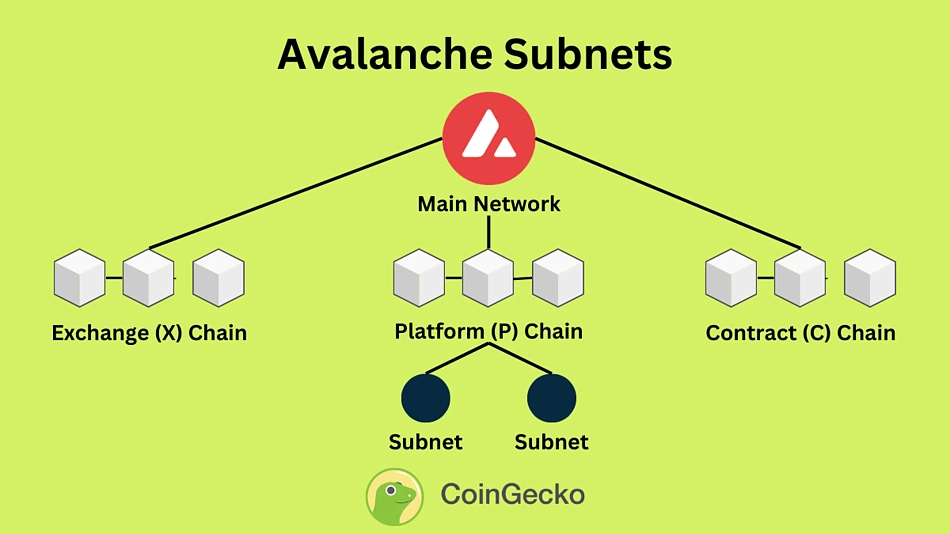
Avalanche Subnets utilize the Avalanche consensus protocol to create custom virtual machines (VMs) on top of the Avalanche network. This approach abstracts much of the underlying networking and consensus complexity, allowing developers to focus on application-specific logic. Subnets benefit from the security and liquidity of the main Avalanche network while maintaining sovereignty over their state and rules. This model is particularly attractive for enterprises seeking a balance between customization and operational efficiency, as it reduces the overhead of managing independent validator sets.
The following comparison outlines the primary technical distinctions between these frameworks to assist in architectural planning.
| Framework | Primary Language | Interoperability | Enterprise Readiness | Consensus Model |
|---|---|---|---|---|
| Cosmos SDK | Go | IBC (Native) | High (Mature Ecosystem) | Tendermint BFT |
| Substrate | Rust | Parachains (Polkadot) | Medium (Steep Learning Curve) | PBFT / BABE / GRANDPA |
| Avalanche Subnets | Go (Go-EVM, AvalancheGo) | C-Chain / X-Chain | High (Managed Infrastructure) | Avalanche Consensus |
Sovereign infrastructure for enterprise ai
Custom application-specific blockchains, commonly referred to as appchains, provide the architectural foundation required for enterprise-grade AI workloads. Unlike general-purpose public networks, these sovereign L1 solutions are engineered to handle the unique computational and compliance demands of artificial intelligence. By decoupling the execution layer from the consensus layer, enterprises can maintain strict control over data sovereignty while achieving the throughput necessary for real-time inference and training.
Data privacy and compute isolation
The primary advantage of sovereign infrastructure is the ability to enforce compute isolation. Enterprise AI models often process sensitive proprietary data or regulated personal information that cannot be exposed to public mempool visibility. Appchains allow organizations to run nodes within their own virtual private clouds or on-premises data centers, ensuring that training data and inference logs remain within their compliance boundaries. This isolation prevents data leakage and ensures that cryptographic proofs of computation do not inadvertently reveal underlying dataset details.
Regulatory alignment and auditability
Regulatory frameworks such as the EU AI Act and various data protection laws require clear audit trails for automated decision-making. Custom appchains enable the implementation of permissioned access controls and immutable logging mechanisms that are tailored to specific jurisdictional requirements. Enterprises can configure governance parameters to ensure that every transaction and model update is recorded in a verifiable, tamper-proof ledger. This transparency simplifies the process of demonstrating compliance to regulators and internal audit teams.
Tailored performance for AI workloads
AI workloads are characterized by high-frequency data ingestion and complex mathematical operations. General-purpose blockchains often struggle with the latency and cost associated with these operations. Appchains allow developers to optimize the virtual machine and consensus mechanism specifically for AI-related tasks. For instance, an appchain can be configured to prioritize low-latency finality for real-time inference requests or to handle large batch processing for model training. This customization ensures that the blockchain infrastructure scales in direct proportion to the AI application's needs, rather than forcing the application to adapt to the limitations of a shared network.
Compliance and regulatory considerations
By 2026, the regulatory landscape for digital infrastructure has shifted from experimental tolerance to strict enforcement. For enterprises deploying custom app chains, legal compliance is no longer a secondary feature; it is a foundational requirement. General-purpose blockchains often struggle to meet jurisdiction-specific mandates because their decentralized nature obscures data provenance and control boundaries. Custom app chains resolve this by providing sovereign infrastructure, allowing organizations to embed regulatory logic directly into the consensus layer.
The primary advantage of a custom chain is the ability to construct immutable, granular audit trails that satisfy financial and data privacy regulators. Unlike public networks where transaction data is often pseudonymous or fragmented across nodes, a custom chain can enforce identity verification at the protocol level. This ensures that every transaction is tied to a verified entity, creating a clear chain of custody that is essential for audits under frameworks like GDPR in the EU or HIPAA in the United States. The architecture allows for "regulatory nodes" that can monitor activity in real-time without compromising the privacy of the broader network.
Jurisdictional control is another critical factor. Custom chains enable enterprises to select specific geographic regions for their validator nodes, ensuring that data residency laws are technically enforced rather than just policy-driven. This sovereignty is particularly vital for sectors handling sensitive intellectual property or personal health information. By controlling the node geography, organizations can prevent data from crossing borders in violation of local laws, a risk inherent in globally distributed public networks.
Steps to deploy a custom app chain
Launching a sovereign L1 requires a structured approach to infrastructure selection, consensus configuration, and compliance verification. This process outlines the technical deployment pipeline for enterprise-grade custom app chains, referencing primary documentation from infrastructure providers such as Chainstack and Zeeve. The following steps provide a high-level framework for mainnet readiness.
Begin by selecting a consensus framework that supports application-specific optimizations. Platforms like Cosmos SDK or Polygon CDK offer modular tooling for sovereign chains. Evaluate these against your throughput requirements and interoperability needs, referencing the official Chainstack documentation for appchain creation guidelines.

Define the validator set and consensus mechanism. For enterprise AI applications, proof-of-stake variants often provide the necessary finality guarantees. Configure node requirements and slashing conditions to ensure network stability. Consult the Zeeve infrastructure documentation for specific parameters regarding validator onboarding and node management.
Integrate security audits and compliance checks before deployment. This includes smart contract verification, node security hardening, and data governance protocols aligned with relevant jurisdictions. Ensure all codebases undergo third-party auditing to mitigate risks associated with sovereign infrastructure.

Launch a public testnet to validate transaction throughput and consensus behavior under load. Monitor network metrics for latency, block production consistency, and validator performance. Use this phase to identify bottlenecks in the AI workload integration before committing to mainnet resources.

Upon successful testnet validation, proceed to mainnet launch. This involves finalizing genesis block configurations, distributing initial token supplies, and activating monitoring systems. Maintain continuous oversight of network health and regulatory compliance post-launch.
-
Smart contract audits completed by independent firm
-
Validator node infrastructure stress-tested
-
Data governance policy aligned with jurisdiction
-
Mainnet genesis block parameters finalized
This deployment sequence ensures that custom app chains meet the rigorous standards required for enterprise AI workloads. Each step builds upon the previous, creating a robust foundation for sovereign blockchain operations.
No comments yet. Be the first to share your thoughts!